2026 Top Mechanical Watch Manufacturers for Global Buyers

Choosing a mechanical watch manufacturer in 2026 requires more than admiring polished cases and elegant dials. Global buyers need dependable engineering, transparent sourcing, service access, and consistent quality control. This guide examines leading manufacturers through practical details, including movement architecture, finishing standards, accuracy testing, water resistance, warranty terms, and international after-sales support.

A serious evaluation looks beyond showroom photography. Inspectors and experienced buyers may study bridge finishing, jewel settings, rotor efficiency, and the feel of the winding crown. They should also verify production history, technical documentation, repair networks, and replacement-part availability. A beautiful Mechanical Watch can still create frustration when servicing requires overseas shipping or uncertain communication. Small details matter.

No ranking is flawless. Manufacturer data may emphasize strengths while revealing little about failure rates or long-term maintenance. Some conclusions remain provisional, especially for newer brands with limited service records. That uncertainty deserves honest attention. We compare established expertise with emerging innovation, using available evidence rather than marketing language alone. The strongest manufacturers usually combine skilled assembly, reliable movements, responsible business practices, and clear support for buyers across regions. Still, personal priorities differ. A collector may value hand finishing, while a retailer may prioritize delivery stability and warranty response. This introduction sets a practical foundation for identifying manufacturers that deserve closer inspection in the global market.

2026 Top Mechanical Watch Manufacturers for Global Buyers

Mechanical Watch Manufacturing: Definition, History, and Core Technologies

Mechanical watch manufacturing is the controlled production and assembly of a timepiece powered by a wound spring, not a battery. Energy travels through gears to an escapement, which releases it in measured intervals. A balance wheel regulates this motion. Tiny tolerances matter. A slight error in a pivot or jewel can affect accuracy, durability, and service costs.

The craft developed from early portable clocks into compact wristwatches during the nineteenth and twentieth centuries. Modern production combines CNC machining, hand finishing, optical inspection, and controlled assembly rooms. Key technologies include alloy hairsprings, jeweled bearings, shock protection, precision regulation, and water-resistant case construction. Surface treatment also matters. Polished steel reflects light differently from brushed steel, revealing inconsistent finishing.

For global buyers, manufacturing quality should be assessed beyond photographs. Ask about material traceability, movement testing, power-reserve checks, and documented water-resistance testing. Review tolerance data, service procedures, and spare-parts availability. A reliable supplier should explain its quality controls clearly. It should also admit limitations. No mechanical movement stays perfectly accurate in every position or temperature. That is an important, sometimes inconvenient, truth. Cost pressure can also reduce inspection time, although the damage may appear months later. A practical buyer compares evidence, not elegant claims.

How to Evaluate Mechanical Watch Manufacturers for Global Buyers

Choosing a mechanical watch manufacturer in 2026 requires more than inspecting a polished sample. Global buyers should assess movement design, finishing consistency, production capacity, and after-sales support. The Federation of the Swiss Watch Industry reported Swiss watch exports of about CHF 26 billion in 2024. That scale shows strong demand, but export value alone cannot prove manufacturing reliability.

Ask for movement test records, material certificates, water-resistance procedures, and batch-level quality data. A serious manufacturer should explain tolerances in plain language. Check whether each watch receives amplitude, accuracy, and power-reserve testing.

The COSC standard allows an average daily variation of minus four to plus six seconds for certified mechanical movements. Certification helps, but it does not replace factory audits or sample inspections.

Look closely at the details. Does the crown feel gritty? Are the hands aligned at twelve? Is the warranty process documented? Deloitte’s Swiss Watch Industry Insights reports continue to identify quality and brand trust as major purchase factors. Yet trust needs evidence. Request service timelines, spare-parts policies, and technician qualifications before signing a contract. I have seen attractive prototypes fail during repeated winding tests. That mistake is expensive. No checklist is perfect. Buyers should also review independent inspection results and speak with existing distribution partners, where possible. A manufacturer that welcomes difficult questions may be safer than one offering the lowest quotation.

2026 Profiles of Leading Mechanical Watch Manufacturers

2026 Profiles of Leading Mechanical Watch Manufacturers

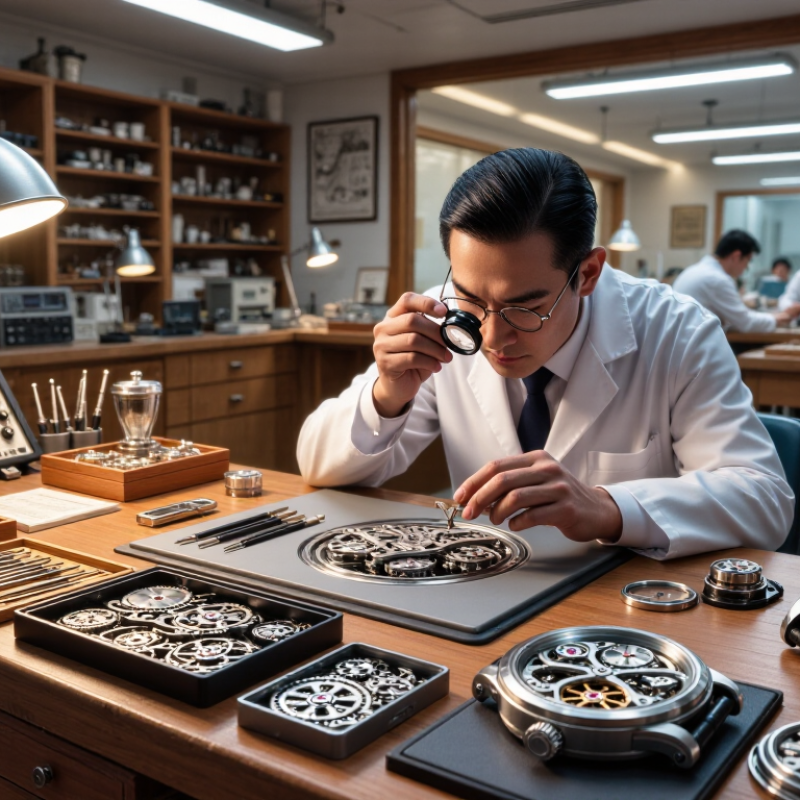
Leading mechanical watch manufacturers now compete through measurable craft, not decorative promises. Their profiles should show where movements are designed, assembled, adjusted, and tested. A useful factory visit reveals benches, timing instruments, component trays, and inspection records. Details matter.

Experienced manufacturers usually explain tolerances, power reserves, water resistance, and service intervals in plain language. They may also provide production capacity, quality-control procedures, and export documentation for global buyers. Independent testing adds confidence, especially when a supplier handles large orders. Still, paperwork cannot replace close inspection. I would request movement samples from different production batches before approving a contract.

Modern workshops often combine computer-controlled machining with hand finishing. This balance can improve consistency while preserving visible character. Skilled technicians may adjust each movement across several positions, recording rate changes after winding and resting. Small differences remain. That is normal, but unexplained differences deserve attention.

A reliable manufacturer also discusses spare parts, repair training, packaging, and long-term support. These practical details affect ownership more than a polished showroom. Some profiles sound impressive yet omit failure rates or return procedures. That gap matters. Buyers should compare evidence, ask uncomfortable questions, and keep written specifications. I still believe the strongest manufacturers are not those claiming perfection, but those showing how they detect and correct it.

2026 Top Mechanical Watch Manufacturers for Global Buyers

Manufacturer-neutral comparison of representative mechanical movement power-reserve benchmarks commonly encountered in the global market.

Standard mechanical movements commonly provide approximately 40–50 hours of power reserve, while extended and multi-day designs typically reach 72–120 hours. Specialized long-reserve movements can exceed 200 hours. Actual performance varies by movement architecture, winding state, and regulation.

Comparing Movements, Materials, Quality, and Production Capabilities

For global buyers in 2026, mechanical watch selection starts with the movement. A reliable caliber should offer stable daily accuracy, serviceable construction, and clear testing records. Many buyers compare 3 Hz and 4 Hz systems, yet frequency alone proves little. A well-adjusted 3 Hz movement may outperform a poorly regulated 4 Hz design. Power reserves around 40 to 72 hours can support weekend use, but longer reserves may increase mechanical complexity.

Materials also shape long-term value. Surgical-grade stainless steel resists daily moisture and surface wear. Titanium reduces weight, though its finish can show scratches more easily. Sapphire crystal improves impact and abrasion resistance, but it can still chip at exposed edges. Case tolerances, crown threading, and gasket placement deserve close inspection. Small gaps often reveal weak assembly control.

Quality depends on repeatable production, not attractive samples. Serious manufacturers should document water-resistance tests, timing results, component inspections, and final visual checks. Buyers should also examine machining capacity, supplier traceability, trained assembly staff, and after-sales repair support. A factory producing thousands of cases monthly may still struggle with movement consistency. Numbers can mislead. I have found that sample inspections are useful, but they never replace shipment-level monitoring. Even strong facilities experience occasional dust, uneven hand-setting, or regulation drift. Honest reporting matters more than perfect claims.

International Purchasing, Certification, Warranty, and After-Sales Support

For global buyers, a mechanical watch manufacturer must provide more than attractive specifications. International purchasing starts with clear product records, realistic lead times, and accurate customs information. Request the movement details, material composition, water-resistance test results, and production inspection reports. Certification should match the destination market. A certificate without traceable testing has limited value. Independent pre-shipment inspection can confirm timekeeping, case finishing, packaging, and serial-number records before payment is completed.

The warranty should be written in plain English and state its coverage period, service procedure, exclusions, and shipping responsibilities. It should address common issues, including inaccurate timing, crown damage, moisture entry, and defective clasps. Some sellers promise “lifetime support.” That phrase needs definition. Ask who pays for transport, where repairs occur, and how long parts remain available. A twenty-day reply is not meaningful support.

After-sales service is often tested when something goes wrong. Buyers should receive a service contact, repair reference number, and expected completion date. Remote customers may need return instructions, customs documents, and protective packaging guidance. Time-zone differences can slow communication. A regional service partner helps, but its qualifications should be verified. In practice, even careful suppliers make mistakes in invoices or inspection notes. That is why buyers should keep photographs, approvals, payment records, and delivery evidence. Small details matter. Reliable support is demonstrated through documented action, not confident promises.

2026 Top Mechanical Watch Manufacturers for Global Buyers - International Purchasing, Certification, Warranty, and After-Sales Support

Evaluation Dimension International Benchmark or Requirement Buyer Verification Evidence Purchasing Relevance
Mechanical Movement Type Self-winding and hand-wound movements store energy in a mainspring and do not require a disposable battery. Accuracy depends on movement design, regulation, position, temperature, and use. Movement specification sheet, regulating procedure, test records, and position-rate results. Helps buyers match the product with target price, positioning, serviceability, and expected accuracy.
Accuracy and Testing A manufacturer should state its own tolerance clearly. Chronometer claims should be supported by testing under ISO 3159 or an equivalent recognized certification route. Individual rate certificate, test protocol, timing-machine report, and defined acceptance tolerance. Reduces disputes concerning timekeeping performance and supports transparent quality control.
Water-Resistance Validation General water-resistance testing is addressed by ISO 22810. Diver’s watches intended for diving applications are assessed under the more specific ISO 6425 requirements. Pressure-test records, gasket specifications, crown-construction details, and the applicable standard referenced in technical documents. Prevents misuse of water-resistance labels and clarifies the difference between daily splash protection and professional diving use.
Quality Management ISO 9001 is the internationally recognized standard for quality-management systems. Certification applies to the defined scope and sites shown on the certificate. Current certificate, certification body, covered production site, scope, and expiry date. Provides evidence of controlled processes but does not by itself guarantee the quality of every individual watch.
Material and Chemical Compliance For relevant markets, buyers commonly review EU REACH obligations and RoHS restrictions where the product falls within the applicable scope. Requirements depend on destination, materials, and product configuration. Material declarations, supplier declarations, laboratory reports, and a market-specific compliance assessment. Supports customs clearance, retailer onboarding, and responsible product documentation.
Traceability and Serial Control A robust system links the watch, movement, components, inspection results, and shipment records through unique identifiers or batch records. Sample traceability report, serial-number policy, batch inspection record, and recall procedure. Improves warranty processing, counterfeit control, inventory management, and field-service accuracy.
International Trade Documentation Commercial invoices, packing lists, transport documents, country-of-origin information, and the correct customs classification are normally required. Wrist-watches are generally classified within HS heading 9102, subject to national tariff rules. Sample export document set, proposed HS classification, origin statement, and Incoterms® 2020 quotation. Reduces delays, unexpected landed costs, and responsibility gaps between seller and buyer.
Packaging and Transit Protection Packaging should protect against shock, moisture, abrasion, magnetization risk, and movement during international transport. Packaging specification, drop or transit test method, carton markings, and humidity-control procedure where required. Lowers arrival damage, cosmetic defects, and claims caused by inadequate export packing.
Warranty Structure Warranty duration, exclusions, geographic coverage, proof-of-purchase rules, and treatment of water damage should be stated in writing. Statutory consumer rights may differ by destination. Warranty certificate, terms and conditions, claim form, repair authorization process, and turnaround-time policy. Creates predictable liability and helps importers calculate after-sales costs.
After-Sales Service Capability A capable service program normally includes diagnosis, cleaning, lubrication, regulation, gasket replacement, pressure testing, parts replacement, and final inspection. Service manual, authorized service-center list, technician training records, spare-parts catalog, and repair workflow. Protects long-term product value and supports local distributors with repair and maintenance needs.
Spare-Parts Availability Critical parts may include mainsprings, crystals, crowns, gaskets, hands, buckles, bracelets, and movement components. Availability periods should be contractually defined where possible. Parts list, ordering procedure, compatibility chart, stock policy, and discontinued-part substitution rules. Determines repairability, service continuity, and total ownership cost.
Private-Label and Customization Control Custom dials, case finishes, hands, straps, packaging, and engravings should be controlled through approved drawings and signed samples. Technical drawings, golden sample, change-control procedure, inspection standard, and intellectual-property ownership terms. Reduces variation between production batches and protects the buyer’s product identity.
Ethical and Environmental Due Diligence Buyers may assess labor practices, environmental controls, conflict-mineral exposure, packaging materials, and supply-chain transparency according to their market and corporate policies. Supplier code of conduct, audit reports, environmental certificates where applicable, material-origin declarations, and corrective-action records. Supports retailer compliance, brand-risk management, and responsible international sourcing.

Note: Certification, customs, product-safety, warranty, and environmental obligations should be confirmed for the specific destination market, product configuration, and contractual arrangement.

Need Help?
X

Ready to Talk?

Our team is ready to connect.