2026 Top Printed Circuit Board Assembly Manufacturers?
Choosing the right printed circuit board assembly manufacturer in 2026 requires more than comparing hourly labor rates. It demands evidence, process discipline, and a clear understanding of product risk. A reliable partner should demonstrate stable sourcing, controlled soldering profiles, automated optical inspection, and complete production traceability. Small details matter. A misplaced component can delay an entire launch.
John W. Mitchell, former IPC president and CEO, has emphasized, “Quality is not an accident; it is the result of intelligent effort.” This principle remains highly relevant to modern printed circuit board assembly. Strong manufacturers build quality into design reviews, supplier qualification, prototype builds, and final inspection. They do not depend only on testing at the end.
This 2026 overview will examine manufacturers through practical criteria. These include engineering support, DFM capability, quick-turn prototyping, capacity, certifications, cybersecurity, and regional supply resilience. It will also consider how suppliers handle complex boards, fine-pitch components, mixed-technology assembly, and demanding thermal requirements. Factory size alone proves little. A smaller specialist may offer stronger communication and faster corrective action.
Still, no ranking is perfect. Public information can be incomplete, and factory performance may vary between facilities. Buyer references deserve careful checking. Site audits reveal details that brochures often hide, including aging equipment, weak documentation, or crowded production lines. The best choice depends on application, volume, budget, and risk tolerance. Readers should treat this list as a research starting point, not a final purchasing decision. Reliability must be verified on the factory floor.
PCB Assembly Market in 2026: Growth, Capacity, and Regional Demand
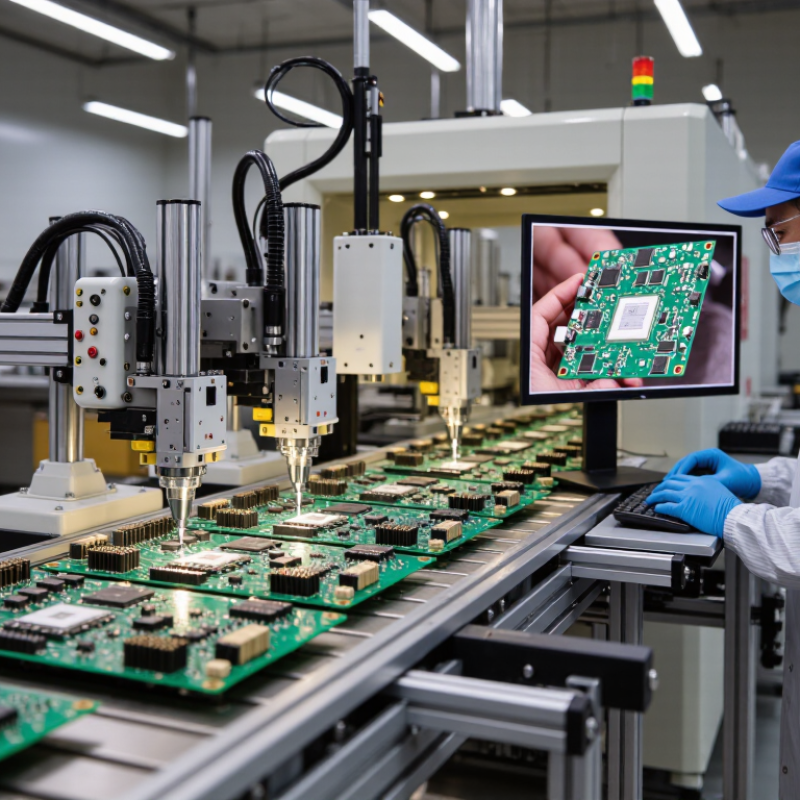
In 2026, PCB assembly demand is rising as factories add connected controls, energy systems, medical devices, and transport electronics. Growth is uneven, however. Industrial automation and data infrastructure are ordering denser boards, while consumer demand remains sensitive to prices and replacement cycles. From supplier reviews, capacity matters as much as quoted cost. An assembly line with spare placement capacity can absorb urgent changes without weakening inspection discipline. That advantage is practical. Manufacturers with controlled sourcing, traceable materials, automated optical inspection, and skilled rework teams are better positioned for complex builds. Still, capacity figures can mislead.
A large factory may report impressive monthly output, yet mix, yield, and scheduling flexibility determine usable capacity. Regional demand is also reshaping production decisions. North America is seeking shorter supply routes and stronger documentation. Europe continues to value energy efficiency, industrial electronics, and regulatory traceability. Asia remains central to component access, engineering depth, and high-volume assembly. Emerging markets are adding demand through telecom upgrades, power management, and local manufacturing programs. These shifts favor manufacturers that can balance regional plants with consistent process controls. Forecasts are not flawless. Component shortages, freight disruptions, and sudden design revisions can quickly change the ranking of top assembly partners. A careful buyer should compare verified capacity, defect data, delivery history, and engineering response times—not polished claims alone. That comparison takes time.
How to Rank Top PCBA Manufacturers by Quality, Scale, and Technology
Ranking the top PCBA manufacturers in 2026 requires more than counting factory space. Quality should carry the greatest weight. Review first-pass yield, defect-per-million data, corrective-action speed, and audit history. IPC-A-610 workmanship records and IPC-6012 qualification evidence provide useful checkpoints. Ask for recent, product-level data. Brochure claims are not enough.
Scale matters when demand changes quickly. Compare monthly placement capacity, line redundancy, component sourcing depth, and tested surge capacity. The World Semiconductor Trade Statistics forecast projected global semiconductor sales would reach about 697 billion dollars in 2025, creating pressure on assembly networks. Technology should be measured through actual capability: fine-pitch placement, microvia assembly, automated optical inspection, traceability, and low-volume engineering support. A large plant may still struggle with complex prototypes. That detail is easy to miss.
Tips: Build a weighted scorecard. Use 40% quality, 30% technology, and 20% scale. Reserve 10% for communication and delivery reliability. Validate every score with evidence, such as anonymized yield reports, sample inspection records, and customer-audit findings. ISO 9001 certification supports process discipline, but it does not prove superior PCBA performance. My practical ranking would also include a small penalty for unclear data. Honest gaps are safer than impressive numbers without context.
2026 Top Printed Circuit Board Assembly Manufacturers?
How to Rank Top PCBA Manufacturers by Quality, Scale, and Technology
This non-company-specific ranking framework assigns the greatest weight to quality because reliable PCBA production depends on workmanship control, process validation, inspection, and traceability. Scale reflects production capacity, supply-chain resilience, and delivery capability. Technology evaluates advanced SMT, fine-pitch and BGA assembly, HDI or microvia support, automation, and engineering capability. Relevant industry references include IPC-A-610, IPC J-STD-001, ISO 9001, ISO 13485, and IATF 16949.
Leading Global EMS Providers: Foxconn, Jabil, Flex, and Sanmina
In 2026, leading global electronics manufacturing service providers are competing through scale, precision, and supply-chain resilience. Their printed circuit board assembly capabilities support medical devices, industrial controls, automotive systems, and communication equipment. Strong providers combine automated placement lines with skilled inspection teams. Traceability matters.
During factory evaluations, I look for controlled humidity, verified component storage, and clear material labeling. Modern lines often use solder paste inspection, automated optical inspection, and X-ray testing for hidden joints. These tools reduce defects, but they do not replace experienced engineers. A misplaced feeder setting can still interrupt an entire production shift. The details decide.
Global EMS leaders also manage sourcing, prototyping, box-build integration, and regional production. This flexibility helps customers respond to demand changes without redesigning every assembly process. Reliable manufacturers publish measurable quality indicators, maintain documented corrective actions, and protect customer data through controlled access. Certifications are useful evidence, not automatic proof of excellence. A factory may pass an audit yet struggle with communication or late engineering changes. That weakness deserves attention. Buyers should compare first-pass yield, delivery performance, engineering support, and recovery plans before selecting a partner. Cost remains important, but unstable quality can become far more expensive. Regular site reviews and sample-based validation create a more dependable relationship.
Advanced PCBA Capabilities: SMT, HDI, Microvia, and 0201 Components
2026 Top Printed Circuit Board Assembly Manufacturers?
Advanced PCBA Capabilities: SMT, HDI, Microvia, and 0201 Components
Advanced PCBA now depends on controlled process windows, not assembly speed alone. IPC’s 2024 Electronics Industry Sentiment Survey reported continued demand for higher-density, more complex electronics. This pressure is visible on the line. A 0201 component can measure about 0.6 by 0.3 millimeters, leaving little tolerance for paste variation or feeder movement. High-resolution SPI, calibrated placement machines, and automated optical inspection are essential.
HDI production requires disciplined layer registration and reliable microvia formation. IPC-2226 and IPC-6016 provide practical design and qualification guidance for these structures.
According to the 2024 PCB Industry Annual Report from Prismark, advanced computing, automotive electronics, and communication equipment remain major growth areas for high-density boards.
These applications often require stacked microvias, fine-pitch BGAs, and shortened signal paths. Process capability matters more than impressive equipment lists.
A useful factory audit should examine drill accuracy, via filling, paste transfer, and first-pass yield. It should also review thermal profiles beside actual 0201 defects. Small parts expose weak controls quickly.
One uncomfortable truth remains: smaller is not automatically better. Poor stencil design can create open joints, solder beads, or hidden voids. Some production teams still trust inspection images too much. Real reliability needs cross-section analysis, traceable materials, and repeatable data across several production lots.


 House of Worship
 Transportation
 Trade shows led display
 retail
 Creative Led Solutions
 Hospitality
 Higher Education
 Corporate LED


