What Are the Best Home Massage Cushions in 2026?
Choosing the best Home Massage Cushion in 2026 depends on more than the number of massage modes. A cushion that feels soothing for ten minutes may become uncomfortable during a longer session. Consider where you plan to use it: against an office chair, on a sofa, or after a long drive. Check its dimensions, attachment straps, controls, and power source before buying. A few centimeters can affect how well it sits against your back.
This guide compares Home Massage Cushion features that matter in everyday use, including massage coverage, adjustable intensity, heat settings, and ease of cleaning. It also considers practical details, such as whether the controls are easy to reach and whether the cushion stays in place when you shift your weight. Comfort is personal. A firm rolling action may suit one person and feel too intense to another. Heat can be pleasant, but it is not essential for everyone. We’ll separate useful specifications from marketing claims and note where product information leaves questions unanswered. That matters. No cushion can replace professional advice for persistent pain or discomfort, and a product description cannot tell you exactly how a model will feel in your home. Use the comparisons as a starting point, then check the fit, return terms, and safety guidance for the specific model you choose.
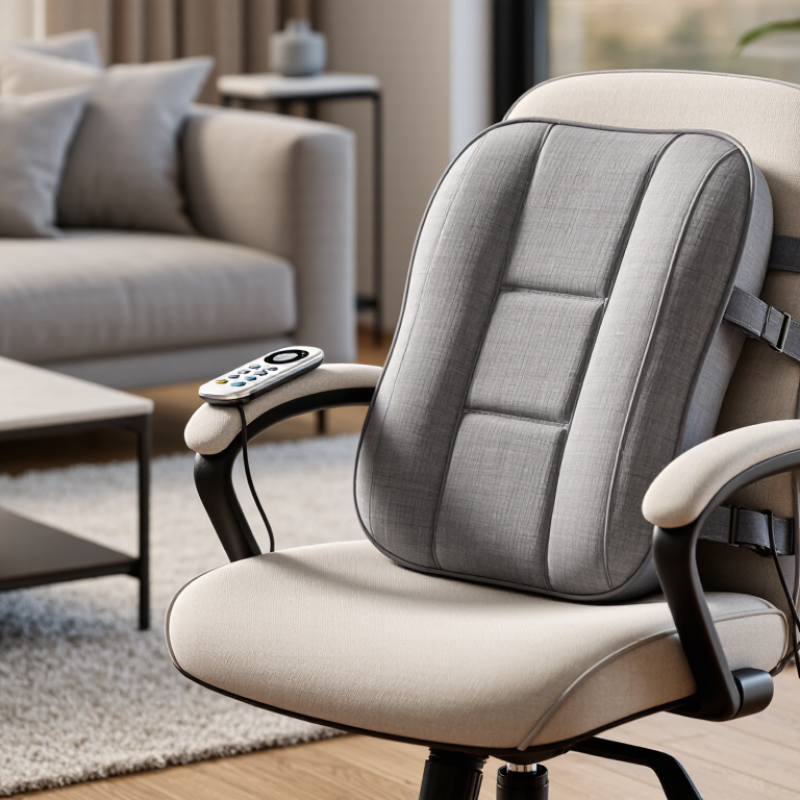
How Home Massage Cushions Work
Home massage cushions work by pressing or moving contact points against the body while you sit or recline. Many use rotating nodes that travel in a circular pattern, imitating a kneading motion. Others rely on vibration, which feels more like a quick, surface-level buzzing than deep pressure. Some models combine these methods, but the sensation depends on the cushion’s shape and your position.
Pressure matters. A cushion placed behind the lower back may feel different from one positioned beneath the shoulders. Built-in straps can help keep it steady on a chair, while a handheld control usually adjusts speed, direction, or session time. Heat, when included, adds gentle warmth; it does not make the massage stronger or treat an injury. Try a low setting first, and shift your posture if a node presses sharply against bone.
The fit can be awkward. A cushion designed for a broad chair might slide on a narrow dining seat, and body size changes where its nodes land. Check the instructions for recommended placement and session limits, and stop if you feel pain, numbness, or lingering irritation. People with reduced sensation or a health condition affecting the back should ask a qualified clinician before using one. A comfortable setting should feel noticeable, not punishing.
Key Features to Compare in 2026
When comparing home massage cushions in 2026, check how well each fits your chair and body. A cushion that presses the rollers into your shoulder blades may feel uncomfortable, even if its settings look impressive. Look for adjustable intensity, clear controls, and a shape that supports your back without forcing you into one posture. Fit matters.
Compare heat as a separate feature, not a reason to choose a cushion by itself. Gentle warmth can feel pleasant, but it should be easy to switch off. Check the recommended session length and whether the device pauses automatically. A quiet motor may suit a shared living room; a removable, washable cover helps with everyday upkeep. Small details count.
Consider weight, storage, cord reach, and the clarity of the instructions before buying. If possible, test the cushion over a thin layer of clothing and begin at the lowest setting. Notice any pinching, excessive pressure, or lingering discomfort. Stop if something feels wrong, and seek qualified advice for persistent pain or relevant health concerns. I would not treat a feature list as proof of comfort; body shape and chair support change the experience. That part is easy to overlook.
Types of Massage Cushions for Home Use
Home massage cushions usually fall into three types: rotating-kneading, vibration, and heat-assisted models. Rotating heads press and roll across the upper back or lower waist. Their motion can feel focused, especially through a thin shirt, but the pressure may feel too strong over bony areas. Vibration cushions create a gentler, broader sensation. They suit people who dislike deep kneading, though some users may find the buzzing distracting. Heat-assisted cushions add warmth rather than a separate massage technique. Heat is optional. Check whether it can be switched off independently.
Shape matters as much as mechanism. A compact cushion can target the neck or lumbar area, while a wider seat cushion covers more of the back during desk use. Look for adjustable straps, washable covers, and controls reachable without twisting. Fit matters. A cushion that slides around can make even a good massage feel awkward.
Evidence also calls for restraint: a Cochrane review of massage for low-back pain included 25 trials and 3,096 participants, but rated the evidence low to very low certainty. That review studied massage therapy, not home cushions, so its findings should not be treated as proof that a cushion relieves pain. Start with a short session and comfortable pressure; stop if discomfort increases.
How to Choose a Cushion for Your Needs
Choosing a home massage cushion starts with the area you want to target. A compact model may suit the upper back after desk work, while a wider cushion can cover more of the shoulder area. Check its dimensions against your chair before buying; a cushion that slides around can make a relaxing session frustrating. Fit matters. Look for controls you can reach without twisting, plus straps that hold the cushion securely. Heat can feel soothing, but it is optional, not a treatment for an injury.
Think about pressure and routine. Some cushions use rotating nodes that feel firm; others provide gentler vibration. If possible, test the pressure briefly, or check the return policy. Avoid using massage on painful, swollen, or irritated areas, and ask a healthcare professional if you have a medical condition or are unsure. More settings do not always mean a better fit. That part is easy to overlook.
Tips: Start with a short session and low pressure. Place a thin layer of clothing between your skin and the cushion if the nodes feel sharp. Keep the cushion near the chair you use most, but store its cord safely. Reassess after a few uses; comfort can be surprisingly specific.
Safe and Effective Use at Home
A home massage cushion can ease ordinary muscle tension, but comfort should guide every session. Keep it on a stable chair and place it over clothing or a thin towel. Begin with the lowest setting for five to ten minutes. Avoid using it on bruises, swollen areas, open skin, or directly over the front of your neck. Strong pressure is not proof of a better result.
NCCIH’s 2022 National Health Interview Survey reported that 11.1% of U.S. adults had used massage therapy in the previous year. That figure reflects use, not proof that every device or technique is safe. NCCIH also notes that massage is generally low risk, while rare serious injuries have been reported. The evidence is a useful reminder: stop if you feel sharp pain, tingling, numbness, or dizziness. Ask a healthcare professional before use if you have reduced sensation, osteoporosis, a recent operation, or take blood-thinning medicine. Be cautious. Home devices cannot assess your condition.
Tips: Read the cushion’s instructions, set a timer, and keep the cord clear of walkways. Don’t fall asleep with it running. Check your skin afterward; persistent redness or soreness means the pressure or duration was too much. A small, uncomfortable truth: “more intense” often just means more intense.


 House of Worship
 Transportation
 Trade shows led display
 retail
 Creative Led Solutions
 Hospitality
 Higher Education
 Corporate LED


