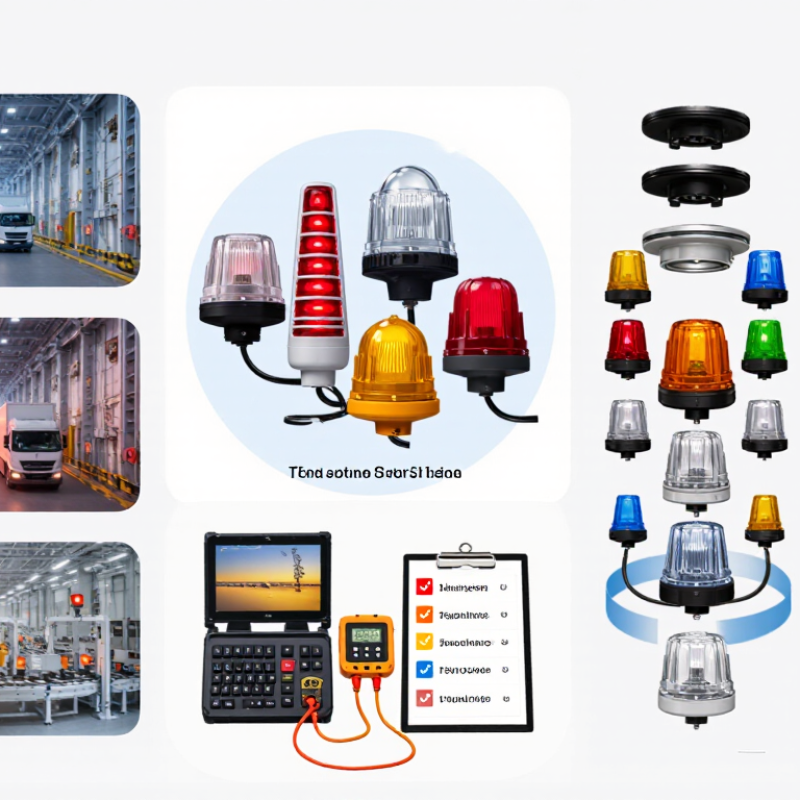
How to Choose the Best Warning Light Manufacturer in China?

Choosing the right Warning Light Manufacturer is not a simple price comparison. It is a decision about visibility, durability, compliance, and operational risk.

The global industrial lighting market continues to expand. Grand View Research reported that the industrial lighting market was valued at approximately USD 9.8 billion in 2023. Its forecast also indicates continued growth through 2030. MarketsandMarkets has identified smart lighting, connected controls, and energy efficiency as major industry trends. These changes affect warning lights directly. Buyers now expect stronger visibility, lower power use, longer service life, and easier maintenance. However, market reports often group warning products with broader lighting categories. That limitation deserves attention.

Dr. John Bullough, a respected lighting researcher, has stated, “Visibility is not just about seeing; it is about being seen.” This principle matters on factory floors, loading docks, emergency vehicles, and automated production lines. A reliable Warning Light Manufacturer should explain beam patterns, flash frequency, lens materials, ingress protection, temperature tolerance, and testing methods. Ask for measurable evidence, not polished claims. Request product samples. Inspect wiring, mounting strength, connector quality, and performance after extended operation.

Certification matters too.

A responsible supplier should provide traceable technical documents and clear warranty terms. Experience also matters. A manufacturer serving harsh industrial environments may understand vibration better than a general lighting exporter. Still, no supplier is perfect. Even an experienced buyer can overlook installation conditions or maintenance costs. The best choice comes from comparing verified specifications, factory capability, independent testing, and real customer feedback. That process takes time. It can prevent expensive failures later.

How to Choose the Best Warning Light Manufacturer in China?

Define Your Warning Light Requirements and Compliance Standards

Before choosing a warning light manufacturer in China, define the operating situation precisely.

Record voltage, current, mounting position, flash pattern, color, sound level, ambient temperature, and expected service life. A tower crane light and a warehouse signal may look similar, but their risks differ sharply. Keep it measurable.

Compliance must guide the specification, not decorate it later.

IEC 60073 addresses the coding of indicators and actuators, while IEC 60529 defines ingress protection ratings. For machinery, ISO 13849-1 may influence safety-related control functions. In North American projects, applicable electrical and workplace requirements should also be checked with a qualified engineer.

The U.S. Bureau of Labor Statistics recorded 5,283 fatal work injuries in 2023. That figure reminds buyers that visibility is not a cosmetic feature.

Ask each manufacturer for test reports, photometric data, wiring diagrams, material details, and production traceability.

Verify whether the stated IP rating applies to the complete assembled product. Sometimes, it does not.

A practical factory audit should examine lens sealing, cable glands, vibration testing, and sample consistency.

Request samples under real conditions: bright sunlight, rain, dust, and reflective metal surfaces. A spreadsheet helps, but it cannot predict every installation problem.

Define acceptance criteria before comparing prices. Lower cost can become expensive when a weak lens, unclear color coding, or missing documentation causes redesigns and delays.

Compare Manufacturer Experience, Product Range, and Customization Options

Choosing a warning light manufacturer in China requires more than comparing prices. Experience should be measured through completed projects, testing records, and stable export history. Ask how long the factory has produced visual and audible signaling equipment. Request samples from similar industries, not only showroom models.

Product range matters because a complete system reduces compatibility risks. Check LED beacons, stack lights, signal towers, sirens, explosion-protected versions, and accessories. The 2024 World Robotics report recorded more than 500,000 industrial robot installations worldwide in 2023. This growth increases demand for clear machine-status signals. A capable manufacturer should explain brightness, IP ratings, operating temperature, sound pressure, and service life with test evidence. Product pages alone are not enough. I have seen attractive samples fail when wiring details were unclear. That weakness deserves attention.

Tips: Compare datasheets line by line. Confirm photometric tests, ingress protection, and material specifications. For customization, ask about lens colors, flash patterns, voltage, connectors, mounting holes, labels, and packaging. Require a prototype before mass production. The manufacturer should provide drawings, revision control, and a realistic approval schedule. According to IEC 60204-1 guidance, machine signaling must remain understandable and suitable for the operating environment. Customization is useful, but excessive variation can complicate maintenance. A standard core with controlled options is often safer. Mistakes still happen. The right supplier documents them and corrects them quickly.

Evaluate Product Quality, Testing Processes, and Certification Records

Choosing a warning light manufacturer in China requires more than comparing prices and product photos. Product quality becomes visible during testing. Ask whether each model undergoes photometric testing for brightness, flash patterns, and viewing angles. Request test conditions, equipment details, and original records, not only selected results.

A dependable factory should test lights under vibration, humidity, temperature changes, and continuous operation. Check sealing performance, cable strength, lens durability, and mounting stability. For outdoor use, verify the stated ingress protection rating through relevant test reports. Production samples should match approved samples. Small differences matter.

Certification records need careful review. Confirm the certificate number, issuing organization, product model, test date, and applicable market. The document should cover the exact warning light, not a similar series. Ask for factory quality procedures, inspection plans, and corrective-action records. During an audit, observe how workers record defects and isolate failed units. That detail often reveals more than a polished certificate.

Do not accept every document immediately. Some reports may be outdated or too general. I have seen suppliers provide impressive files while avoiding simple questions about test frequency. That is a warning sign. A stronger manufacturer explains limitations openly, repeats tests when needed, and welcomes independent verification before mass production. Reliable evidence is usually consistent across samples, records, and factory practice.

Review Pricing, Production Capacity, Lead Times, and Support Services

Price should be judged against delivered performance, not the lowest quotation. Request a detailed breakdown for LEDs, lenses, wiring, tooling, testing, packaging, and freight. Compare at least three quotations using identical specifications. A cheaper unit may hide weaker sealing or shorter service life. During factory reviews, inspect production lines, test records, and rejected-unit logs. Ask for monthly output, peak capacity, and current utilization. China’s official manufacturing PMI uses 50 as the expansion boundary. Compare the supplier’s capacity claims with recent production trends, rather than trusting one impressive presentation.

Lead time needs a written definition. It should separate engineering approval, sample production, component purchasing, assembly, inspection, and shipping. The World Bank’s 2023 Logistics Performance Index evaluates customs, infrastructure, logistics competence, tracking, and timeliness. These factors can affect delivery, even when factory capacity looks strong. Ask for the last twelve months of on-time delivery data. A supplier reporting 98% on-time delivery should explain the calculation. Is it measured by dispatch date or customer arrival? Small details matter. I have seen schedules fail because approval time was quietly excluded.

Tips: Use a scorecard with price, monthly capacity, sample lead time, mass-production lead time, defect rate, and response hours. Request a pilot order before committing to large volumes. Check whether technical support can provide wiring diagrams, replacement parts, and troubleshooting within one business day. Do not accept vague “fast delivery” promises. Require milestones, corrective-action records, and named contacts in the contract.

Verify Manufacturer Reliability Through Samples, Audits, and Customer Feedback

Choosing a warning light manufacturer in China requires more than comparing catalog prices. Start with physical samples. Request several production units, not a specially prepared display piece. Check brightness, lens clarity, wiring quality, mounting strength, and sound consistency. Run the lights for several hours. Heat, vibration, and repeated switching can reveal weaknesses that photographs hide.

A reliable manufacturer should accept a structured factory audit. Review incoming-material records, assembly procedures, inspection checkpoints, and final test reports. Ask how each batch is traced from components to shipment. Confirm whether the factory tests voltage tolerance, weather resistance, and service life under stated conditions. A clean showroom means little without documented processes. I have seen attractive samples fail because the wiring terminals loosened during vibration testing. That mistake is easy to miss.

Customer feedback adds another practical layer. Request references from buyers with similar environments, such as warehouses, construction equipment, or outdoor gates. Look for comments about delivery consistency, communication, failure rates, and replacement support. Recent feedback matters more than old praise. Verify whether complaints received clear responses. Be careful with anonymous testimonials; they may be genuine, but they provide limited evidence. One overlooked question is how the manufacturer handles a defective batch. The answer often shows more reliability than a sales presentation. Samples, audits, and feedback should support the same conclusion, though they rarely align perfectly.

Need Help?
X

Ready to Talk?

Our team is ready to connect.