How to Choose the Best Wine Decanter in 2026?

Choosing the best Wine Decanter in 2026 is not about finding the heaviest crystal vessel. It is about matching the decanter to the wine, the occasion, and your practical habits. A young Cabernet may need a broad bowl and generous air. An older Pinot Noir may need gentler handling and a narrow neck. Sediment changes the decision, too. So does storage space.

Wine educator and Master of Wine Jancis Robinson has said, “There is no need to decant every wine.” That reminder keeps this purchase grounded. A decanter should improve service, not create theater. Look for a stable base, a pouring lip that limits drips, and glass clear enough to inspect the wine’s color. Lead-free crystal is often preferred for safety and clarity, while dishwasher compatibility can matter more than decorative cutting. Small details count.

Think about your real table. Will the vessel hold one standard bottle comfortably? Can you clean its deepest curve without a special brush? Does the stopper fit securely overnight? These questions sound ordinary. They prevent expensive regret. Even experienced drinkers sometimes choose beauty over balance. I have done that myself.

This guide examines shape, capacity, material, cleaning, aeration, and long-term durability. It also considers modern designs that use controlled airflow without overwhelming delicate aromas. No single Wine Decanter suits every bottle. The best choice is the one that serves your wine carefully, pours confidently, and remains useful after the first impressive dinner.

How to Choose the Best Wine Decanter in 2026?

Understanding Wine Decanters and Their Role in Wine Service

How to Choose the Best Wine Decanter in 2026?

A wine decanter is more than an attractive serving vessel. It separates sediment, increases oxygen contact, and improves the rhythm of service. The OIV’s State of the World Vine and Wine Sector 2024 reported global wine consumption of about 214 million hectolitres in 2023. As drinking occasions become more selective, careful presentation matters more. However, decanting is not automatically beneficial. Some delicate wines can lose aroma quickly.

Choose the decanter according to the wine’s age and structure. Young, tannic red wines usually benefit from a broad bowl. It exposes more liquid to air and softens powerful textures. Older wines often need a narrow vessel with a gentle pour. Their fragile aromas can fade within minutes. White wines rarely require decanting, but a small, cool decanter may help tightly closed, full-bodied styles open gradually. I learned this the hard way.

Practical design matters during real service. A stable base prevents spills, while a long neck supports controlled pouring. A capacity near 1.5 litres suits a standard 750-millilitre bottle without overfilling. Transparent glass makes sediment easier to monitor. Cleaning is equally important; residue trapped around the neck can distort the next wine’s aroma. The Wine Market Council’s consumer research continues to show that wine enjoyment is strongly connected with occasion and experience, not flavour alone. That evidence supports choosing a decanter for handling, timing, and guests—not appearance only.

Matching Decanter Shape and Size to Different Wine Styles

How to Choose the Best Wine Decanter in 2026?

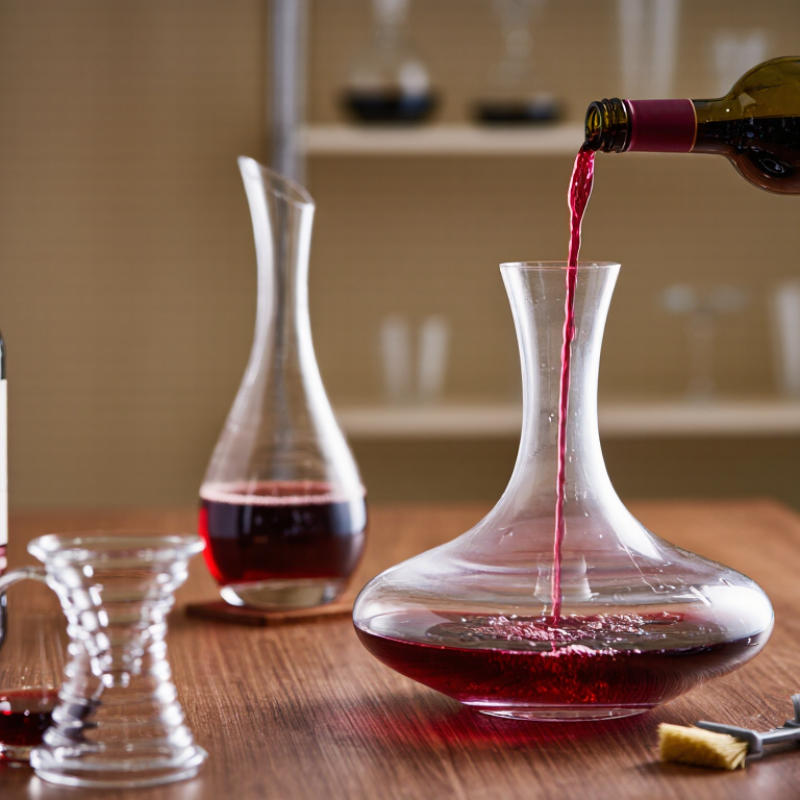
A decanter should match the wine’s structure, not only its appearance. For young, full-bodied reds, choose a broad bowl with a wide base. More surface area helps oxygen soften firm tannins and release hidden aromas. Cabernet Sauvignon, Syrah, and similar wines often benefit from this shape. Pour slowly. Sediment is not the only concern.

Size matters as much as shape. A 1.5-liter decanter suits one standard bottle and leaves enough room for swirling. An oversized vessel may spread a small pour too thinly, reducing temperature control. For lighter reds, a medium bowl offers gentler aeration. Pinot Noir can lose delicate aromas in an aggressively wide decanter. I have seen this happen during tastings. More air was not better.

Older red wines usually need a narrow, tall decanter or a simple sediment separator. Their fragile aromas can fade quickly after heavy aeration. Keep the wine moving carefully, then serve it soon. White wines rarely need long decanting, but a small, narrow vessel can open rich, textured styles. Sparkling wines require extra caution because vigorous pouring can flatten their bubbles. A brief test pour is safer than decanting the entire bottle. There is no perfect shape. The wine, serving time, and room temperature still matter.

How to Choose the Best Wine Decanter in 2026? — Matching Decanter Shape and Size to Different Wine Styles

Wine Style Suggested Decanter Shape Useful Capacity Why This Shape Works Practical Decanting Guidance
Young, full-bodied red (such as Cabernet Sauvignon or Syrah) Broad-based decanter with a wide bottom and open neck 1.5–2 L The larger surface area exposes more wine to air, which can help soften firm tannins and release aromas. Try 30–90 minutes, then taste periodically. The wine’s age and structure affect how much aeration it needs.
Medium-bodied red (such as Merlot or Sangiovese) Medium-width bowl with a gently sloping neck 1–1.5 L Provides some aeration without requiring the very large footprint used for highly structured reds. Start with 15–45 minutes and adjust by tasting; many wines are ready sooner than expected.
Delicate or aged red (such as mature Pinot Noir) Narrower, easy-pour decanter with a smaller air-exposed surface 0.75–1.2 L A more restrained shape allows gentle handling and limits unnecessary prolonged exposure to air. Decant shortly before serving if needed to separate sediment. Older wines can fade quickly, so taste as you pour.
Vintage Port or another sediment-prone fortified red Clear, narrow-necked decanter that is easy to pour steadily 0.75–1.5 L Clarity makes sediment visible, while a controlled pour helps leave it behind in the bottle. Stand the bottle upright in advance when possible, then pour slowly. Decanting time depends on the wine and serving plan.
Full-bodied white (such as oaked Chardonnay) Medium bowl with a moderate opening 0.75–1.2 L A little air can open aromas, while a compact vessel is easier to keep cool than a large, broad decanter. Chill the decanter or serve promptly. Use a short interval, then taste; not every white wine benefits from decanting.
Rosé or light-bodied white Small, narrow decanter or a simple serving carafe 0.5–1 L These wines are generally served for freshness, so extensive aeration is usually unnecessary. Decant only when useful for removing sediment or presentation. Keep the wine chilled and avoid leaving it exposed for long.
Sparkling wine Typically no decanter; if needed, use a narrow, chilled carafe 0.75–1 L A wide bowl releases carbonation quickly, reducing the lively bubbles that are central to the style. Serve from the bottle for the best preservation of bubbles. Decant only when there is a specific reason, such as reducing pressure for a sensitive wine.

Choosing a size: A 750 ml bottle fits comfortably in most 1–1.5 L decanters, leaving room for swirling. A larger vessel is useful for broad aeration, but shape, wine condition, and tasting preference matter more than capacity alone.

Evaluating Materials, Airflow, Capacity, and Ease of Cleaning

How to Choose the Best Wine Decanter in 2026?

A good decanter should match your serving routine, not just your table setting. Borosilicate glass offers heat resistance and clear visibility, while crystal can feel thinner and more refined. However, delicate glass often needs gentler handling. I have learned this after knocking a narrow vessel against a faucet. It survived, but the lesson was expensive.

Airflow controls how quickly wine opens. A broad base exposes more wine to oxygen and suits young, structured reds. A narrow design slows the process and may work better for older wines. The neck should pour smoothly without splashing. Excessive agitation can disturb sediment and flatten subtle aromas. Small details matter. A flared opening also helps release trapped aromas during tasting.

Capacity deserves careful thought. A 750-milliliter bottle needs room to breathe, so a decanter holding about 1.2 to 1.5 liters is usually practical. Oversized models look impressive but may be awkward to lift when full. Cleaning is equally important. Choose a wide mouth, smooth interior, and removable drying stand if available. Tiny ridges can retain oily residue and water spots. A soft brush helps, but abrasive tools may scratch the surface. I sometimes prefer a simpler shape, even when it looks less dramatic. Convenience tends to matter more after the third use.

Comparing Decanting Methods for Young, Mature, and Fragile Wines

Choosing the best wine decanter in 2026 depends less on appearance and more on the wine’s condition. A young, firm red usually benefits from a broad bowl and a wide opening. Pour it with energy, then leave it exposed for 30 to 60 minutes. This splash decanting method increases oxygen contact and can soften tight aromas. Do not assume more air always helps. Some young wines become flat after excessive exposure.

Mature wines require greater control. Stand the bottle upright for several hours, allowing sediment to settle. Then pour slowly into a narrow decanter while watching the shoulder through a light. Stop when the sediment approaches the neck. I prefer a smooth, thin-lipped vessel because it reduces dripping and keeps the transfer steady. Double decanting can remove sediment, but it may disturb delicate aromas. My timing is not always perfect.

Fragile wines need the gentlest method. Pour directly into a small decanter, or serve from the bottle after careful sediment removal. A narrow shape limits oxygen exposure and helps preserve fading fruit, earthy notes, and a soft finish. Taste after ten minutes, then reassess every few minutes. There is no universal schedule. Temperature, fill level, age, and storage history all matter. A decanter should support observation, not replace it.

How to Choose the Best Wine Decanter in 2026?

Comparing decanting methods for young, mature, and fragile wines

These values show practical guideline midpoints for resting time after decanting. Young, structured reds generally benefit from more oxygen exposure, while mature wines need gentler handling. Fragile or very old wines are usually served soon after careful separation from sediment to reduce the risk of losing delicate aromas.

Typical guidance ranges: young reds 30–120 minutes, mature reds 10–30 minutes, and fragile wines 0–10 minutes. Actual timing depends on grape variety, tannin level, bottle age, storage, and condition.

Choosing the Best Wine Decanter for Your Budget and Serving Needs

Choosing the right decanter
Choosing the best wine decanter in 2026 starts with your serving routine, not its appearance. The OIV reported global wine consumption at about 214 million hectolitres in 2024, the lowest level in more than 60 years. Smaller households and occasional drinkers may therefore need compact decanters. A 750-millilitre vessel suits one bottle without dominating a kitchen shelf.

Budget matters, but construction matters more. Under $40, choose clear, lead-free glass with a stable base and a wide opening. Around $40 to $100, thicker glass, smoother pouring, and easier cleaning become realistic. Above $100, you may gain refined balance and hand-finished details, but not necessarily better aeration. The Decanter shape should match the wine. Broad bowls help young, tannic reds breathe. Narrower designs protect delicate older wines from excessive oxygen.

Try it with water first. A comfortable neck prevents drips during dinner. A dishwasher-safe design can save time, although repeated heat may cloud some glass. I prefer a decanter that holds slightly more than one bottle. It leaves room for swirling. Still, I have overestimated how often I would use elaborate shapes. That was money poorly spent. The Silicon Valley Bank State of the Wine Industry reports has repeatedly highlighted cautious consumer spending, making practical value especially relevant.

A beautiful decanter is tempting. A manageable one gets used.

Need Help?
X

Ready to Talk?

Our team is ready to connect.