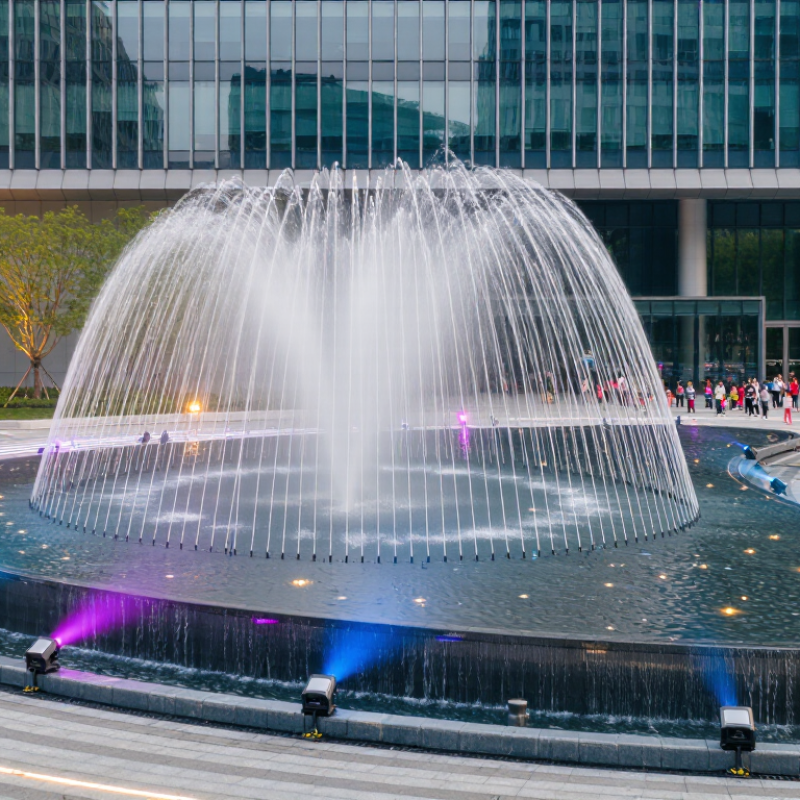
How to Choose an Outdoor Musical Fountain Supplier

Choosing an Outdoor Musical Fountain supplier is not merely a purchasing decision. It is a long-term investment in engineering, public safety, visual identity, and visitor experience. A reliable supplier should demonstrate completed projects, detailed technical drawings, water-treatment knowledge, and responsive after-sales support. Request evidence, not attractive promises.

Mark Fuller, founder of WET Design, is widely associated with the idea: “We don’t design fountains; we design experiences.” This principle matters when comparing suppliers. A capable partner should understand how music, lighting, water movement, and architecture work together. Ask to see a live installation, if possible. Notice the pump-room noise, spray control, lighting alignment, and cleanliness around the pool edge. Small details reveal professional habits.

Technical capacity deserves equal attention. Review nozzle materials, pump efficiency, control-system compatibility, maintenance access, winterization methods, and spare-parts availability. Confirm who handles programming changes after installation. A beautiful demonstration can hide difficult maintenance. That is where many buyers become disappointed.

The supplier should also provide a realistic schedule and transparent cost structure. Compare lifecycle costs, not only the initial quotation. An inexpensive system may consume more energy or require frequent repairs. Sometimes, the cheapest option is not economical.

There is no perfect supplier. Every project has compromises. Your site may expose them quickly. Select a company willing to discuss limitations, revise designs, and document responsibilities clearly. The best Outdoor Musical Fountain partner combines artistic judgment with measurable engineering performance, dependable communication, and practical experience. That balance creates a fountain people enjoy today and operators can manage tomorrow.

How to Choose an Outdoor Musical Fountain Supplier

Define Your Outdoor Musical Fountain Project Requirements

Before choosing an outdoor musical fountain supplier, define the project in measurable terms. Record the available footprint, water depth, viewing distance, and expected visitor capacity. A fountain beside a hotel entrance needs different controls than one serving a public plaza. Note local weather conditions, including wind, freezing temperatures, dust, and intense sunlight. These details affect nozzle height, pump selection, lighting protection, and maintenance access.

Decide how music, lights, and water movement should work together. Will the system use scheduled shows, live control, or simple timed sequences? List preferred audio formats, operating hours, noise limits, and emergency shut-off requirements. Include the water source, drainage route, filtration plan, and electrical capacity. Ask suppliers for hydraulic calculations, equipment specifications, safety documentation, warranty terms, and a realistic maintenance schedule. Clear documents reveal expertise better than attractive videos.

Tips: Create a one-page requirement sheet before requesting quotations. Add site drawings, seasonal weather data, and target show durations. Leave space for future changes. A rigid design may look efficient, but it can become expensive when visitor patterns change. Keep several practical questions open. For example, how quickly can technicians reach hidden pumps, and who will clean the basin after heavy storms? Request references for projects with similar scale and climate. Compare lifecycle costs, not only the initial price. The cheapest proposal may require frequent cleaning, replacement parts, or specialist visits. I once underestimated maintenance access in a planning exercise; the equipment worked, but servicing became unnecessarily difficult. That small oversight deserved more attention.

Compare Supplier Experience, Technical Expertise, and Project Portfolios

Choosing an outdoor musical fountain supplier requires more than attractive renderings. Compare years in operation, completed project types, and team continuity. Experienced suppliers can explain how they handled wind, sediment, freezing temperatures, and public traffic. Ask for dated project records, client references, and maintenance logs. A supplier with ten years of claims but few verifiable installations deserves careful questioning. Real experience leaves physical evidence: clean equipment rooms, labeled cables, and accessible service paths. Details matter.

Technical expertise should be tested through specific questions. Can the team calculate pump flow, nozzle pressure, sound coverage, and power demand? Do engineers coordinate hydraulics, lighting, control software, drainage, and electrical protection? Request drawings, testing procedures, spare-parts plans, and commissioning schedules. Ask how the system responds when one pump fails. A credible supplier explains limitations, not only performance figures. No supplier gets every detail right. Their documentation should remain clear enough for operators after handover.

Project portfolios reveal more when compared, not admired. Look for fountains in similar climates, footprints, budgets, and visitor conditions. Request videos from ordinary operating days, not only launch events. Speak with site owners about downtime, water quality, response speed, and training. One impressive plaza cannot prove consistent performance. Some portfolios look polished. They may still omit maintenance difficulties. Record unanswered questions and revisit them before signing.

Evaluate Fountain Design, Materials, Technology, and Customization Options

Choosing an outdoor musical fountain supplier requires more than reviewing attractive videos. Start with the fountain design. Ask for hydraulic drawings, nozzle coverage, water depth, sound levels, and maintenance access. A strong supplier should explain how wind affects spray height and projection. This matters because poor airflow planning can create wet walkways and uneven performances.

Materials reveal long-term competence. Request stainless-steel grades, pump specifications, cable protection, and coating details. The U.S. Department of Energy reports that pumping systems can represent significant industrial energy use, so variable-speed pumps deserve serious attention. The International Energy Agency also identifies motor systems as major electricity consumers worldwide. Ask for measured power data, not optimistic estimates. Control technology should support timed shows, water-level sensors, emergency shutdowns, and remote diagnostics. DMX or equivalent control systems can improve synchronization, but complex software may increase training needs. That is an overlooked weakness.

Tips: Compare three technical proposals. Test one full show. Inspect welds, filters, drains, and access panels. Request a five-year maintenance forecast, including replacement parts and labor. Customization should fit the site, not merely copy a reference project. Consider musical timing, local weather, audience distance, and future expansion. Industry guidance from the World Health Organization emphasizes reducing water risks in public settings; therefore, filtration and disinfection plans should be documented. I would also question any supplier promising “maintenance-free” operation. Outdoor equipment rarely is.

How to Choose an Outdoor Musical Fountain Supplier: Design, Materials, Technology, and Customization Evaluation
Evaluation Dimension Key Evaluation Points Practical Benchmark Evidence to Request Suggested Weight Priority
Fountain Design Visual concept, water geometry, viewing angles, musical synchronization, and suitability for the site. The design should provide clear sightlines from the main audience areas and include hydraulic, electrical, lighting, and maintenance layouts. Concept drawings, 3D renderings, hydraulic calculations, site-layout drawings, and examples of comparable project types without confidential client information. 15% Very High
Hydraulic Performance Pump selection, nozzle distribution, water height, flow stability, filtration, and resistance to wind effects. The supplier should specify pump flow rate, total head, nozzle flow requirements, filtration capacity, and expected operating tolerances. Hydraulic calculations, pump curves, nozzle data sheets, flow-control diagrams, and commissioning test records. 12% Very High
Structural Materials Corrosion resistance, water exposure, ultraviolet exposure, mechanical strength, and compatibility with treatment chemicals. Wet-area metal components should generally use suitable stainless steel or equivalent corrosion-resistant materials; exposed finishes should be rated for outdoor use. Material certificates, grades and thicknesses, coating specifications, corrosion-resistance information, and fastener details. 10% Very High
Nozzles and Water Effects Nozzle precision, spray pattern consistency, clog resistance, adjustability, and replacement availability. Nozzles should maintain stable patterns at the specified pressure and be accessible for cleaning, adjustment, and replacement. Nozzle specifications, spray-height data, maintenance procedures, spare-part list, and water-quality requirements. 8% Very High
Lighting Technology Underwater lighting, color control, brightness, beam angle, waterproofing, heat management, and serviceability. Lighting equipment should be designed for continuous wet-environment use, with appropriate ingress protection and accessible replacement procedures. Lighting technical sheets, ingress-protection ratings, power consumption, color-control protocol, cable details, and testing documentation. 8% Very High
Music and Control System Show programming, audio synchronization, automation, remote access, fault monitoring, and integration with site systems. The control system should support timed shows, manual override, emergency stop, adjustable water and light cues, and backup show files. Control-system architecture, software demonstration, supported file formats, user permissions, backup method, and operator training plan. 10% Very High
Customization Options Custom water patterns, site-specific dimensions, music programming, lighting scenes, architectural integration, and branding-free visual design. The supplier should clearly separate standard modules from custom engineering and identify the effect of changes on cost, schedule, and maintenance. Customization matrix, revision process, design-fee schedule, sample show storyboard, and approval milestones. 8% High
Safety and Compliance Electrical protection, equipotential bonding, emergency shutdown, slip prevention, water hygiene, and local code compliance. The proposal should address electrical protection, safe access, emergency stop locations, chemical handling, and applicable local regulations. Risk assessment, single-line diagrams, grounding details, safety procedures, compliance declarations, and inspection documentation. 12% Very High
Energy and Water Efficiency Pump efficiency, variable-speed control, water recycling, evaporation management, lighting consumption, and operating schedules. The supplier should provide estimated electrical consumption, water-loss assumptions, filtration strategy, and reduced-operation modes. Energy calculations, pump-efficiency data, water-balance estimate, control logic, and annual operating-cost assumptions. 6% High
Installation Capability Site coordination, civil-interface requirements, lifting, pipework, electrical connections, testing, and commissioning. Responsibilities should be defined for foundations, drainage, power supply, plant-room access, embedded items, installation, and final testing. Installation method statement, interface schedule, project program, manpower plan, commissioning checklist, and handover requirements. 5% High
Maintenance and Spare Parts Routine cleaning, filter servicing, nozzle access, pump maintenance, software support, and spare-part availability. The supplier should provide preventive-maintenance intervals, critical spare parts, recommended stock levels, and response procedures for faults. Maintenance manual, spare-parts catalog, service schedule, troubleshooting guide, and training materials. 4% High
Warranty and Technical Support Warranty coverage, exclusions, response time, remote assistance, on-site support, software updates, and long-term serviceability. The contract should define coverage for equipment and workmanship, response targets, replacement procedures, and post-warranty support options. Warranty terms, service-level agreement, escalation process, support contacts, and lifecycle-support statement. 2% Medium
Recommended supplier-selection method: assign each criterion a score from 1 to 5, multiply by the suggested weight, and compare the weighted totals. 100% Target: 4.0/5 or higher
Scoring guide: 1 = inadequate evidence, 2 = below requirements, 3 = acceptable, 4 = strong evidence, 5 = exceptional technical and service capability.

Review Installation Services, Maintenance Support, and Warranty Coverage

How to Choose an Outdoor Musical Fountain Supplier

Installation quality often determines whether a fountain performs beautifully or becomes a costly repair project. Ask whether the supplier provides hydraulic calculations, electrical drawings, equipment schedules, and site-specific commissioning. The installation team should test pump flow, nozzle alignment, lighting synchronization, control software, drainage, and emergency shutoff systems. NFPA 70 includes dedicated requirements for fountain electrical equipment, bonding, and ground-fault protection. Local authorities may adopt different editions, so the supplier should verify compliance before construction begins.

Maintenance support deserves equal scrutiny. Request a written schedule covering pump inspections, filter cleaning, water treatment, nozzle checks, lighting tests, and winterization. The U.S. Department of Energy’s Operations and Maintenance Best Practices Guide reports potential energy savings of 5% to 20% through stronger maintenance programs. That matters. A reliable supplier should provide response times, spare-parts availability, remote diagnostics, and trained technicians. Ask for sample service records, not promises. No checklist is perfect. I would still test one emergency call before signing a long service agreement.

Warranty coverage should state the duration, labor terms, replacement process, and exclusions in plain language. Confirm whether pumps, underwater lights, control panels, coatings, and corrosion damage receive separate protection. Ask who pays for removal, shipping, and reinstallation. Software updates and control-system failures also need written coverage. A short warranty is not automatically poor, but vague wording creates risk. Compare the warranty with the supplier’s maintenance requirements, because missed water-quality checks may void protection.

How to Choose an Outdoor Musical Fountain Supplier

This 100-point evaluation framework gives equal importance to installation services and maintenance support, while warranty coverage confirms the supplier’s long-term commitment. Review project planning, on-site commissioning, response time, preventive maintenance, spare-parts availability, warranty duration, and warranty response terms before making a purchasing decision.

Assess Pricing, Compliance Standards, Communication, and Contract Terms

How to Choose an Outdoor Musical Fountain Supplier

Assess Pricing, Compliance Standards, Communication, and Contract Terms

A low quote can hide major costs. Compare pump capacity, control systems, lighting, installation, training, and maintenance support. Ask for an itemized estimate with taxes, transport, testing, and replacement parts clearly listed. The cheapest offer may exclude winter protection or water-treatment equipment. That creates unpleasant surprises later. I once compared only equipment prices, and ignored service response times. A costly lesson.

Request evidence of relevant electrical, structural, water-safety, and environmental compliance. Requirements vary by location, so confirm approvals with qualified local professionals. Check test reports, material specifications, emergency shutoff arrangements, and noise-control measures. Outdoor fountains face rain, wind, sediment, and temperature changes. Suppliers should explain how their design handles these conditions. Vague promises are not enough.

Communication matters before construction begins. Require readable drawings, a project schedule, named contacts, and written responses to technical questions. A supplier that avoids detailed answers may create delays during installation. The contract should define milestones, payment releases, delivery responsibilities, commissioning tests, training, warranty coverage, and maintenance response times. Include a change-order process for unexpected ground conditions. Review exclusions carefully. Even experienced buyers can miss small clauses that shift repair costs to the owner. Ask for references from comparable public projects, then verify whether those installations remain operational after several seasons.

Need Help?
X

Ready to Talk?

Our team is ready to connect.