Top Odorless Silicone Tube Manufacturers for Global Buyers
Choosing the right Odorless Silicone Tube manufacturer requires more than comparing prices or polished websites. Global buyers need dependable materials, repeatable dimensions, and clear production evidence. A tube may look clean yet retain volatile residues, processing smells, or inconsistent curing byproducts. Odor matters. So does traceability.
Silicone materials expert Dr. Johannes Karl Fink emphasizes, “Silicone performance depends on formulation, processing, and careful testing.” This principle guides our review of leading manufacturers. We examine platinum-cured and peroxide-cured options, silicone purity, wall thickness control, tensile strength, compression resistance, and temperature stability. We also consider whether suppliers provide batch records, inspection reports, material declarations, and practical samples before large orders. Strong manufacturers explain their testing methods instead of hiding behind broad claims such as “medical grade” or “premium quality.”
Global sourcing also brings small but costly details. Can the factory maintain a stable inner diameter across production lots? Are tubes packed without absorbing warehouse odors? Does customer support respond clearly when specifications change? These questions often reveal more than a catalogue. A perfect supplier does not exist. Even experienced buyers can overlook packaging, lead times, or minimum order quantities. That is worth admitting.
This guide presents top Odorless Silicone Tube manufacturers for international buyers using a balanced, evidence-based approach. The selection considers manufacturing experience, technical capability, quality systems, customization support, communication, and delivery reliability. Readers should still request current documents and conduct application-specific validation. Product requirements differ. A laboratory transfer line, food-processing hose, and wearable device tube cannot share one simple standard.
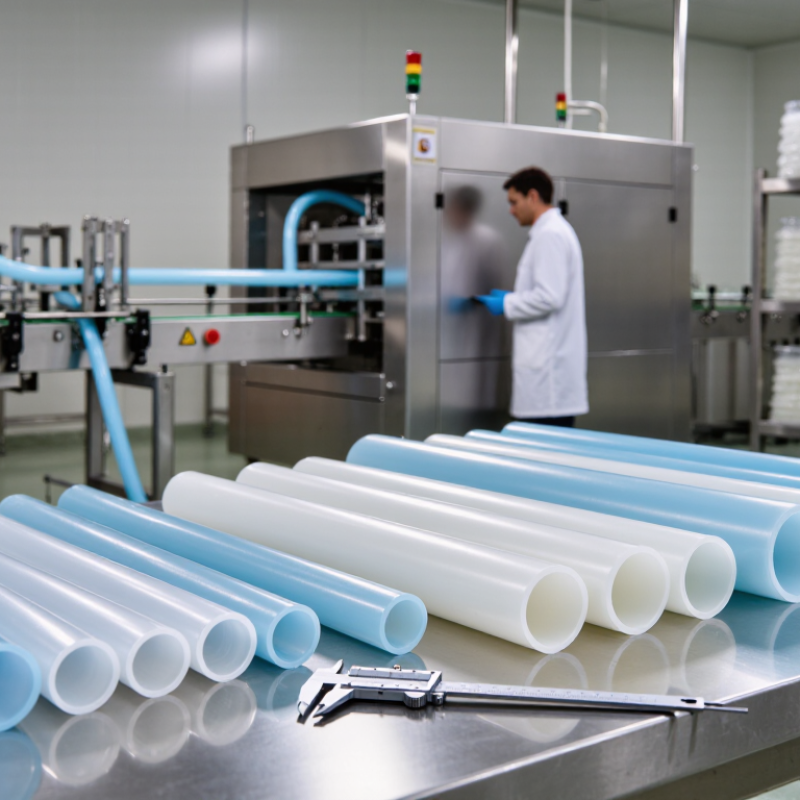
What Makes a Silicone Tube Truly Odorless?
Top Odorless Silicone Tube Manufacturers for Global Buyers
What Makes a Silicone Tube Truly Odorless?
A truly odorless silicone tube does not simply hide smell with fragrance. It limits volatile compounds, curing residues, and low-molecular-weight siloxanes. Platinum-cured silicone often performs better than peroxide-cured material. However, curing chemistry alone is not proof of odorlessness. Mixing, post-curing, packaging, and storage also matter.
I have found that a clean tube can still release a faint smell after heating. That detail is easy to miss. Reliable manufacturers should provide batch records, curing conditions, and migration or VOC test results. ISO 16000-6 supports laboratory analysis of indoor VOCs, while sensory testing can reveal odors that instruments overlook. A practical inspection includes opening sealed packaging, warming the tube, and checking it near neutral materials.
The 2024 Grand View Research silicone market analysis estimated the global market at more than USD 18 billion, with continued growth through 2030. This expansion increases the need for measurable quality, not vague “odorless” claims. For food, medical, or cleanroom applications, buyers should also review applicable extraction, biocompatibility, and hygiene testing. A supplier may pass one test and fail another. That is why odor evaluation should cover the finished tube, not only its raw silicone compound.
Key Quality Standards for Silicone Tube Manufacturers
For global buyers, an odorless silicone tube should meet more than a basic smell test. Quality begins with controlled raw materials, clean production areas, and documented curing conditions. A neutral odor usually indicates low volatile residues, but it does not prove safety. Buyers should request independent testing, not rely on appearance alone.
Reliable manufacturers verify Shore A hardness, inner diameter, wall thickness, tensile strength, and elongation for every approved specification. Dimensional checks matter. A tube that looks perfect may still leak under pressure. Testing should also include aging, compression, temperature resistance, and repeated bending. For medical, food, or laboratory applications, manufacturers need suitable compliance documents for the destination market. These may include material declarations, extractables data, biocompatibility evidence, and batch-specific certificates.
Traceability separates a capable supplier from a merely attractive one. Each production batch should connect to material records, test results, operators, and release dates. During audits, I look for sealed samples, calibrated instruments, and clear rejection procedures. Small gaps can reveal larger problems. We have seen suppliers provide polished reports while overlooking inconsistent wall thickness between cartons. That issue is easy to miss and expensive to correct. Buyers should also review packaging cleanliness, storage limits, and change-control practices before approving long-term supply.
Key Quality Standards for Silicone Tube Manufacturers
This applicability matrix shows whether each reference is directly relevant to a major buyer verification area. A value of 1 means the standard primarily addresses that area; 0 means it is not its primary scope. These standards do not by themselves define “odorless” performance, so buyers should also request sensory evaluation, volatile-residue testing, and batch-level documentation.
How to Compare Global Suppliers and Customization Options
Global buyers should compare odorless silicone tube suppliers by process control, not catalogue photos. Grand View Research valued the global silicone market at about USD 18.6 billion in 2023, with steady growth expected through 2030. That expansion increases supplier choice, but quality can vary sharply between factories. Request material specifications, Shore A hardness, inner and outer diameter tolerances, and documented post-curing conditions. Odor often reflects volatile residues, pigments, or incomplete curing.
Ask for recent test reports, not promises. Useful evidence includes volatile-matter results, extractables data, batch traceability, and certificates supporting relevant food, medical, or industrial applications. ISO 10993 or USP Class VI testing may matter for fluid-contact products, while REACH and RoHS documentation can support international purchasing. Confirm the testing laboratory and report date. A certificate without batch linkage is weak evidence.
Customization needs a written engineering review. Specify length, wall thickness, bend radius, transparency, color, connector fit, packaging, and annual volume. Platinum-cured tubing may offer cleaner performance, but it is not automatically suitable for every application. Request samples from the actual production line. Measure them after shipping and temperature exposure. Compare three suppliers using the same drawing and acceptance limits. I have seen “odorless” samples change after sealing, so packaging and storage deserve equal attention. The better supplier explains failures openly, even when the answer is inconvenient.
How Buyers Can Choose the Right Silicone Tube Manufacturer
How Buyers Can Choose the Right Silicone Tube Manufacturer
Choosing an odorless silicone tube manufacturer requires more than comparing prices. Buyers should examine material quality, production controls, and documented testing. Ask whether the silicone is suitable for the intended temperature, pressure, and contact conditions. A reliable manufacturer should provide clear specifications, batch records, and traceable quality reports. Request samples before placing a large order. Smell the tubes after packaging and again after washing. Odor can appear later. This simple check is often overlooked.
Technical experience matters when tube dimensions are unusual. Discuss inner diameter, wall thickness, flexibility, hardness, and required tolerances with the engineering team. A capable supplier should explain how these choices affect flow and service life. Independent testing may confirm tensile strength, elongation, compression resistance, and cleanliness. Buyers should also review production capacity, inspection methods, packaging protection, and delivery consistency. Certifications can support trust, but they do not replace practical verification.
Tips: Ask for a small trial batch and compare it with the approved sample. Check whether the manufacturer can maintain stable dimensions across repeated orders. Confirm change-control procedures before approving production. Keep written records of every specification. Even experienced buyers sometimes focus on odor alone and miss weak connectors, uneven walls, or poor packaging. That mistake can become expensive. When communication feels vague, slow down and ask for measurable answers.


 House of Worship
 Transportation
 Trade shows led display
 retail
 Creative Led Solutions
 Hospitality
 Higher Education
 Corporate LED


