Communicate worship schedules and sermon messages while engaging your congregation with visual technology.
View More
LED displays in transportation settings, such as airports, train stations, and bus terminals, serve as dynamic platforms for real-time information, advertising, and wayfinding, enhancing passenger experience with clear, up-to-date travel details and announcements.
View More
Differentiate yourself from the competition by incorporating a digital experience in your booth with our trade show LED displays.
View More
Communicate your brand’s message, stand out from the competition and engage your target market with LED digital signage.
View More
We offer creative solutions at cost-effective rates. You will be able to deliver your sermons more effectively and engage your congregation through one-of-a-kind lyric video walls and house of worship LED displays.
View More
Enhance ambiance, display interactive directories and wayfinding displays, and promote amenities and events to elevate the guest experience.
View More
Incorporate digital displays to enhance your students’ learning experience and market to prospective students and donors.
View More
Transform your corporate spaces with PixelFLEX LED video displays. Enhance communication, elevate branding, and create dynamic environments.
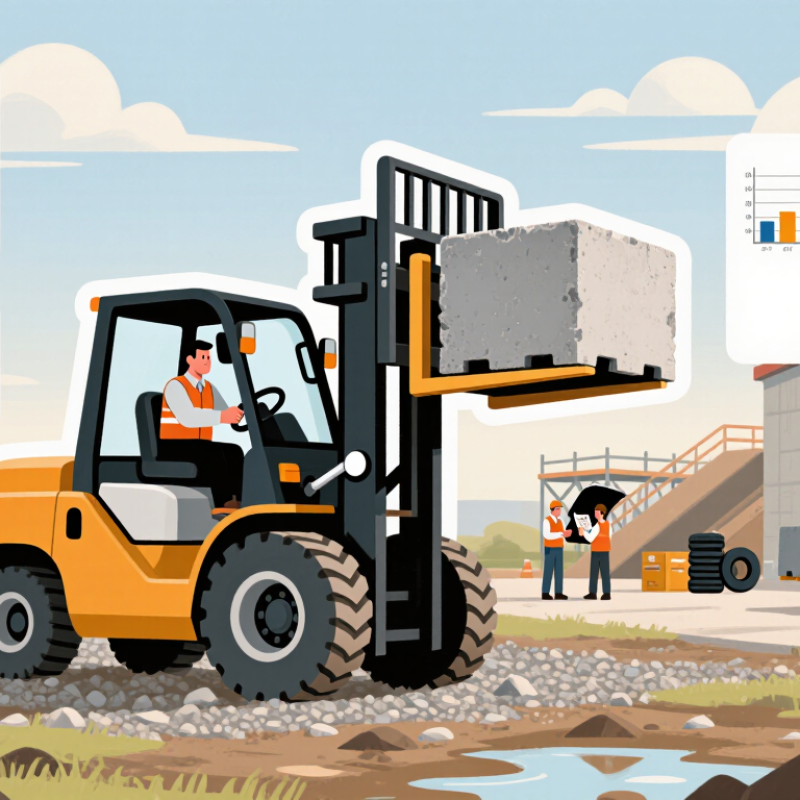
View MoreBuying an Off Road Forklift is rarely a simple price comparison. A machine working on gravel, mud, slopes, or construction sites faces risks that warehouse trucks never meet. Tire design, ground clearance, drivetrain strength, lifting capacity, and operator visibility can decide whether a project moves smoothly or stops after one rainy morning.
Industry data supports careful planning. The World Industrial Truck Statistics (WITS) reports that global forklift deliveries have exceeded two million units in recent reporting years. That scale shows strong demand, but it also reveals a crowded and uneven market. Buyers must compare specifications, not marketing promises. The International Organization for Standardization’s ISO 5053-1 provides internationally recognized terminology for industrial trucks. Meanwhile, OSHA’s powered industrial truck guidance highlights training, stability, inspections, and safe operating practices in the United States. Local requirements still differ. A certificate accepted in one country may not satisfy another authority.
The seven buying tips in this guide focus on practical evidence. They examine terrain, load charts, engine or battery choices, attachments, service access, spare parts, and supplier credibility. Look closely. A forklift that lifts 5,000 kilograms on paper may handle far less on uneven ground or with a long attachment. That detail is easy to miss. It can become expensive. Buyers should request test results, maintenance records, warranty terms, and references from comparable sites. No checklist is perfect. Weather, operator habits, and poor route design can still undermine a good purchase. Careful buyers leave room for those uncomfortable questions.
Buying an off-road forklift starts with the load, not the brochure. Record the heaviest pallet, its dimensions, center of gravity, and lifting height. A compact machine may handle 2,000 kilograms on paper, yet lose capacity when the load extends forward. Measure loading bays, ramps, and container openings before requesting quotes. Ask operators to demonstrate typical loads. Their practical observations often reveal awkward turning points that drawings miss.
Tip: Build a load profile from real shipments, not estimated averages. Include unusual loads, because occasional jobs can create daily safety problems.
Terrain deserves equal attention. Note slopes, mud, loose gravel, wet grass, and sharp changes between surfaces. Measure the steepest grade and identify areas where wheels may sink. Four-wheel drive can improve traction, but it does not replace ground preparation or careful speed control. Check chassis clearance and turning radius near storage racks. I have seen specifications look suitable until a forklift bottomed out at a drainage channel. That mistake was avoidable, but easy to miss during a quick site visit.
Tip: Test the forklift on your actual route. A dry afternoon proves little.
Operating requirements complete the picture. Estimate daily hours, climate exposure, operator skill, maintenance access, and transport limitations. Confirm mast height, attachment compatibility, visibility, braking performance, and emergency controls. Request test results under conditions resembling your site. Recheck assumptions after rain, with a full load, and during shift changes. Document every answer, including uncertainties, before comparing total ownership costs.
Choosing an off-road forklift starts with the ground, not the lifting capacity. Pneumatic tires suit gravel, mud, and uneven yards because their flexible sidewalls absorb shocks. Solid tires resist punctures and offer stable handling on rocky construction sites. However, they transmit more vibration to the operator and chassis. That trade-off is easy to underestimate.
Ground clearance should match the deepest rut, not the smoothest test area. A forklift with 300 millimeters of clearance may still bottom out when carrying a raised load. Measure actual site obstacles, including drainage edges and compacted soil. The U.S. Occupational Safety and Health Administration estimates about 85 powered industrial truck fatalities and 34,900 serious injuries annually. Better clearance and visibility can reduce exposure to unstable terrain, although they cannot replace training.
Tip: Compare traction systems under load. Limited-slip differentials help when one wheel loses contact, while four-wheel drive improves climbing on loose surfaces. Check the manufacturer’s gradeability test method; “maximum slope” figures are not always comparable. The 2023 World Industrial Truck Statistics report recorded more than two million powered industrial trucks sold globally, showing how varied operating conditions have become. Ask for tire pressure ranges, axle articulation limits, and tested drawbar pull. A deeper tread may improve mud grip, but it can feel harsh on hard ground. Real site trials remain wiser than relying on a brochure.
Compare tire types by representative ground clearance and traction suitability. Pneumatic tires generally provide the highest clearance and are better suited to uneven outdoor surfaces, while cushion tires are optimized for smoother, firm floors.
Ground-clearance figures are representative buying benchmarks in millimeters. Traction suitability is a comparative 1–5 index based on typical performance across loose soil, gravel, mud, and uneven terrain.
7 Off Road Forklift Buying Tips for Global Buyers
An off-road forklift must lift the real load, not only the advertised maximum. Check rated capacity at the stated load center, lift height, attachment, and terrain angle. A 3,000-kilogram rating can fall sharply with a longer load or raised mast. OSHA estimates that powered industrial trucks cause about 85 workplace fatalities and 34,900 serious injuries annually in the United States. Stability deserves equal attention. Review the stability triangle, wheelbase, tire design, ground clearance, and braking performance. Test the machine on the actual slope, if possible.
Tip: Ask for capacity charts, not a single headline figure. Measure pallet dimensions, road gradients, and turning space before comparing quotations. Select power for the working cycle, not just peak horsepower. Diesel may suit long outdoor shifts, while electric systems can reduce local emissions and noise. However, battery charging space, cold weather, and duty cycles can change the calculation. I would not trust a fuel estimate without a practical shift trial.
Safety features should support trained operators, not replace them. Look for seat belts, falling-object protection, alarms, lighting, visibility aids, speed control, and emergency shutoff access. ISO 5053-1 provides internationally recognized terminology for industrial trucks, while local rules may require additional testing or certification. OSHA also requires operator training and evaluation for covered truck operations. A camera helps, but it cannot repair a blocked sightline. Ask for service records, inspection intervals, spare-parts support, and documented overload protection. The cheapest model may become expensive when downtime reaches a muddy worksite.
A durable off-road forklift must survive more than a showroom demonstration. Inspect welds, axle housings, mast channels, underbody guards, and tire sidewalls. Ask for load-cycle records, brake-test results, and cold-start performance. On a muddy slope, weak cooling systems and poor ground clearance become obvious quickly. Do not judge durability by lifting capacity alone. One assumption fails: bigger is not always tougher.
Compliance requires country-specific evidence, not a generic certificate. Check conformity documents, operator manuals, emissions records, safety labels, and approved attachments against local requirements. ISO 3691-1 and ANSI/ITSDF B56.6 provide useful reference points, but acceptance rules still vary by market. OSHA reports about 35,000 serious forklift injuries and 85 fatalities annually in the United States, showing why training and safety systems deserve equal attention. The ILO estimated 2.93 million work-related deaths worldwide in 2023, reinforcing the cost of weak risk control.
Warranty terms should state coverage hours, response times, excluded parts, and transport responsibility. A two-year warranty means little if filters, axles, or electronic controllers are excluded. Request a service map, technician coverage, spare-parts lead times, and remote diagnostic capability. Test the support process before purchase: send a technical question and measure the reply. Global service sounds reassuring. Sometimes it is not. A written escalation path, local training, and stocked wear parts can protect uptime better than attractive pricing. Cite: OSHA Powered Industrial Trucks eTool; ILO, A Call for Safer and Healthier Working Environments, 2023.
| Buying Tip | What to Evaluate | Practical Benchmark | Evidence to Request | Global Buyer Considerations |
|---|---|---|---|---|
| 1 Match Capacity to the Real Load | Confirm rated capacity at the actual load center, lift height, attachment type, and terrain conditions. Do not select a truck based only on its maximum headline capacity. | Select a rated capacity with approximately 10–15% reserve above the heaviest routine load, while remaining within the manufacturer’s load chart. | Request the capacity plate, load chart, attachment rating, maximum load-center data, and a written calculation based on the intended load. | Convert local units carefully, such as kilograms versus pounds and millimeters versus inches. Confirm whether the rating applies to level, firm ground or uneven off-road conditions. |
| 2 Check Durability for Rough Terrain | Inspect the frame, axles, steering system, mast, hydraulic lines, underbody protection, tires, and operator-protection structure for resistance to impact, dust, mud, and vibration. | Prioritize a reinforced chassis, sealed electrical connectors, protected hydraulic routing, and tires with a tread pattern suited to the worksite. | Ask for material specifications, axle and ground-clearance data, component service intervals, corrosion-protection details, and results from load or endurance testing. | Consider climate and terrain together: high humidity, salt exposure, heat, freezing temperatures, loose soil, slopes, and frequent road-to-site travel can require different configurations. |
| 3 Verify Safety and Regulatory Compliance | Check compliance with the rules that apply in the destination country and the specific operating environment, including braking, steering, visibility, alarms, lighting, guarding, and operator protection. | The truck should be supplied with a valid conformity package and safety equipment configured for the intended market. | Request the declaration of conformity or equivalent documentation, applicable test reports, operator manual, risk information, serial-number records, and safety inspection checklist. | Depending on the market, relevant requirements may include ISO 3691-1, ANSI/ITSDF B56.6, regional machinery rules, and local emissions regulations. Confirm applicability with the importer or competent authority. |
| 4 Compare Engine, Emissions, and Fuel Requirements | Evaluate power output, fuel consumption, exhaust emissions, noise, cold-start performance, and compatibility with the fuel or energy infrastructure available at the worksite. | Choose an engine or power system that meets the destination market’s current emissions requirements without creating an impractical fuel or after-treatment burden. | Request engine identification, emissions certificates, fuel specifications, service requirements, after-treatment details, and estimated consumption under typical duty cycles. | Diesel, LPG, gasoline, and electric models may be regulated differently. Check fuel availability, import restrictions, charging capacity, battery service, and environmental rules before purchase. |
| 5 Review Warranty Coverage in Writing | Examine warranty duration, operating-hour limits, exclusions, covered components, travel costs, labor coverage, parts replacement terms, and the claim procedure. | A transparent warranty should state both time and operating-hour limits and distinguish the coverage for major components such as the engine, transmission, axle, mast, and battery. | Obtain the complete warranty policy, exclusions, scheduled-maintenance obligations, approved-fluid requirements, claim forms, and response-time commitments. | Confirm whether warranty work can be completed in the destination country and whether freight, customs duties, technician travel, and translation of technical documents are included or excluded. |
| 6 Validate Parts and Service Support | Assess the availability of wear parts, filters, tires, hydraulic components, electrical parts, diagnostic tools, service manuals, and trained technicians. | Obtain a recommended spare-parts list for the first 12 months and confirm a documented process for technical support and urgent parts requests. | Request parts catalogs, component cross-reference information, service schedules, technician-training records, diagnostic procedures, and a written service escalation path. | A nearby distributor is useful but should not be the only support option. Confirm remote troubleshooting, multilingual documentation, time-zone coverage, and parts shipment procedures. |
| 7 Calculate Total Cost of Ownership | Compare purchase price with fuel or electricity, tires, scheduled maintenance, repairs, operator training, downtime, transport, import costs, and resale considerations. | Use a three- to five-year cost model based on expected annual operating hours rather than comparing purchase prices alone. | Request a complete quotation showing machine price, attachments, delivery terms, commissioning, training, spare parts, taxes, customs charges, and optional equipment separately. | Compare total landed cost under the selected Incoterm and currency. Include exchange-rate exposure, local taxes, port handling, insurance, and the cost of keeping a backup machine available. |
Global buyers should calculate total ownership cost before testing an off-road forklift. The invoice is only the starting point. Include purchase price, ocean freight, duties, insurance, commissioning, operator training, fuel, electricity, tires, scheduled maintenance, repairs, and resale value. The U.S. Energy Information Administration’s Short-Term Energy Outlook shows that fuel prices can change significantly across regions and seasons. Build a low-price and high-price scenario.
Use real operating conditions during the cost model. Record daily hours, average load weight, travel distance, slope, surface condition, and idle time. A machine carrying two-ton loads across wet gravel will consume resources differently from one working on compact soil. Request maintenance intervals and parts prices in writing. Ask how quickly critical components can arrive in your country. Downtime is often the quietest expense. It can stop loading, delay deliveries, and force rental equipment.
The Material Handling Industry 2024 Annual Industry Report identifies labor, productivity, and operating pressure as continuing industry concerns. That supports comparing output per operating hour, not only horsepower. Calculate cost per productive hour: total five-year cost divided by expected working hours, then adjust for downtime. Test fuel use, turning stability, braking, visibility, and tire wear. I have seen buyers overestimate annual utilization; that mistake makes a cheap forklift appear efficient. Recheck the model using conservative hours and a realistic resale value. Safety training and inspection requirements also belong in the budget, because compliance costs vary by country and worksite.