10 Smart Door Lock Buying Tips for Global Buyers
Buying a Smart Door Lock across borders is not simply a choice between fingerprints, PINs, and smartphone apps. A lock must fit the door, the building, the climate, and the people using it every day. A beautiful product can still fail if its cylinder size is wrong or its battery compartment is difficult to reach.
This guide presents ten practical buying tips for global buyers. It considers installation measurements, emergency power, encryption, user permissions, app compatibility, and after-sales support. It also examines weather resistance for humid coastal homes and cold warehouse entrances. Look for clear technical specifications, tested materials, transparent privacy policies, and support that responds in your time zone. Recognized safety certifications can offer useful evidence, but they should not replace careful product verification.
Small details matter. Can the lock be opened when your phone battery dies? Is the backup key protected from casual access? How long does the battery last under heavy daily use? These questions reveal more than a polished product photograph. They also expose a common weakness: buyers may trust convenience features before checking reliability.
No lock is perfect.
Real homes create unexpected problems. Wi-Fi may drop, a family member may forget a code, or an installer may overlook a narrow door frame. A dependable purchase includes a practical backup plan. Check local installation requirements and applicable consumer protections before ordering. The right Smart Door Lock should improve controlled access without creating new uncertainty.
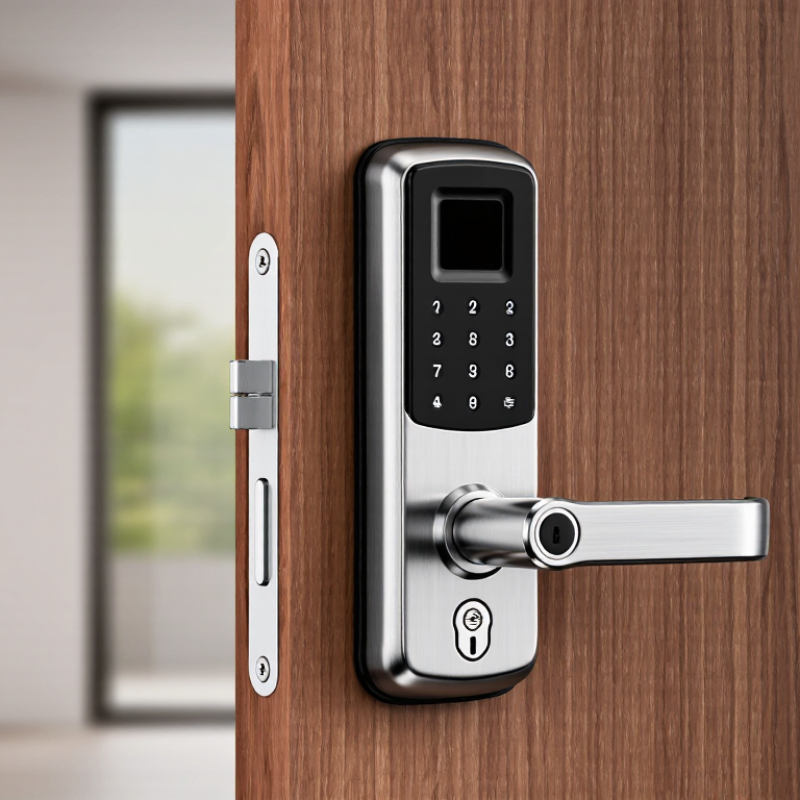
Define Your Security Needs and Smart Lock Use Case
Before comparing features, define what the lock must protect and who will use it. A front door in a busy apartment needs different controls from a quiet holiday home. List daily users, temporary guests, children, cleaners, and emergency access needs. Then ask a harder question: what happens when the phone is lost? Good planning includes a physical key, PIN, or verified backup method. Keep it simple.
Match the lock to the door, not the product page. Check door thickness, latch shape, handle position, and frame alignment. A metal gate may face rain, dust, and temperature changes. An interior bedroom door may need privacy rather than remote entry. For rentals, reversible installation and non-destructive fitting can protect the deposit. Check local fire, building, and data-protection requirements before ordering. These details are easy to ignore.
Choose authentication based on real behavior. A keypad helps guests, while fingerprint access may suit family members with full control. Remote unlocking deserves extra caution. Use individual accounts, strong passwords, two-factor authentication, and activity alerts where available. Confirm how access is removed after a guest leaves. Test low-battery warnings and emergency power options at the actual doorway. I once focused too much on fast unlocking and overlooked shared access records. That was a useful correction. Security is also disciplined administration.
Check Door Compatibility, Lock Type, and Installation Requirements
A smart lock is only useful when it fits the door already installed. Measure door thickness, backset, edge clearance, and the distance between the lock and frame. Check whether the door swings inward or outward. A small mismatch can leave the bolt rubbing against the strike plate. That problem is easy to underestimate.
Lock type matters. Deadbolts, mortise locks, rim locks, and multipoint systems need different solutions. A replacement smart deadbolt may suit a standard residential door, but it may not fit a narrow metal frame. The lock should also match the door’s security grade and fire-rating requirements. ANSI/BHMA standards provide useful benchmarks for durability and performance. Do not rely on appearance alone.
Installation is often the hidden cost. Grand View Research valued the global smart lock market at about USD 2.73 billion in 2023, showing strong demand but not guaranteed compatibility. Read the installation guide before buying. Confirm power access, keypad clearance, Wi-Fi or hub requirements, and emergency entry options. Parks Associates has reported growing smart-home adoption, yet connected devices still depend on stable networks and correct setup. Test the lock manually before tightening every screw. I once assumed an existing strike plate would align perfectly. It did not. A professional installer can check alignment, wiring limits, and local building requirements when the door is unusual.
Evaluate Power Supply, Emergency Access, and Offline Operation
Buying a smart door lock starts with power planning, not screen features. Check whether it uses AA batteries, a rechargeable pack, or wired electricity. Ask how long it runs under heavy daily use. A hallway with frequent entry drains batteries faster. Keep a dated spare set nearby. Simple, but often forgotten. Low-battery warnings should appear on the keypad and mobile app. Do not trust one warning channel. Wireless signals can fail.
Emergency access deserves a physical test before purchase. Look for a mechanical keyway, protected backup power contact, or approved external battery connection. Test the method with the door closed, preferably in daylight. A hidden key outside may create a security weakness. A portable battery can help, but the connector must match exactly. Check whether the emergency procedure damages weather seals or requires removing panels. Ask the seller for written steps. Avoid relying only on phone Bluetooth during travel, a flat phone, or a damaged handset.
Offline operation matters where Wi-Fi is unstable. Confirm whether PINs, fingerprints, or schedules remain usable without internet. Some locks store permissions locally; others need cloud verification for changes. This difference matters during router failure. Review event storage, time accuracy, and behavior after battery removal. I once assumed an offline code would work indefinitely; it expired after a preset period. That mistake changed my checklist. Test the lock in airplane mode, with the router unplugged, and after a battery swap. Record the result.
Verify Security Standards, Privacy Policies, Warranty, and Support
10 Smart Door Lock Buying Tips for Global Buyers
Verify Security Standards, Privacy Policies, Warranty, and Support
A smart door lock should meet recognized security standards in its target market. Check certification details, testing scope, and issuing organizations before trusting a compliance label. A printed logo proves little by itself. Ask whether the certification covers the lock, mobile app, cloud service, or only one component. These details can change the buying decision.
Examine the privacy policy carefully. Identify what data the lock collects, where it is stored, and how long it remains available. Check whether biometric data, access logs, or home addresses leave your region. Strong encryption matters, but so do account deletion and breach notifications. Test the lock during a Wi-Fi outage and after the batteries weaken. Small failures become serious at a locked door.
Warranty terms deserve equal attention. Confirm coverage periods, replacement procedures, shipping responsibilities, and exclusions for outdoor exposure or incorrect installation. Support should offer clear documentation and reachable assistance in your time zone. Ask about firmware updates and the promised support period. I would not rely on vague claims such as “lifetime protection.” They sound reassuring, yet often hide limits. My own buying checklist still misses details sometimes, especially regional compatibility. That is a useful warning: verify every claim in writing before paying.


 House of Worship
 Transportation
 Trade shows led display
 retail
 Creative Led Solutions
 Hospitality
 Higher Education
 Corporate LED


