Top 10 Agricultural Drones for Efficient Farming Solutions?
In recent years, the agricultural sector has seen remarkable advancements with the rise of Agricultural Drones. These drones provide farmers with innovative solutions to enhance productivity and efficiency. According to a recent report by MarketsandMarkets, the agricultural drone market is projected to reach $5.9 billion by 2026, growing at a CAGR of 30.3%. This growth indicates a strong demand for precision agriculture tools.
Agricultural drones enable farmers to conduct aerial surveys, monitor crop health, and optimize resource management. These tools capture high-resolution images and data analytics, helping to identify areas needing attention. However, the implementation of these technologies is not without challenges. Farmers may face difficulties in data interpretation and the integration of drone technology into existing farming practices.
Despite these hurdles, the potential benefits of agricultural drones are substantial. They can reduce labor costs and minimize resource waste. As the industry evolves, ongoing education and training are essential for farmers to fully harness their capabilities. Understanding how to leverage agricultural drones effectively can lead to improved yields and sustainable farming practices.
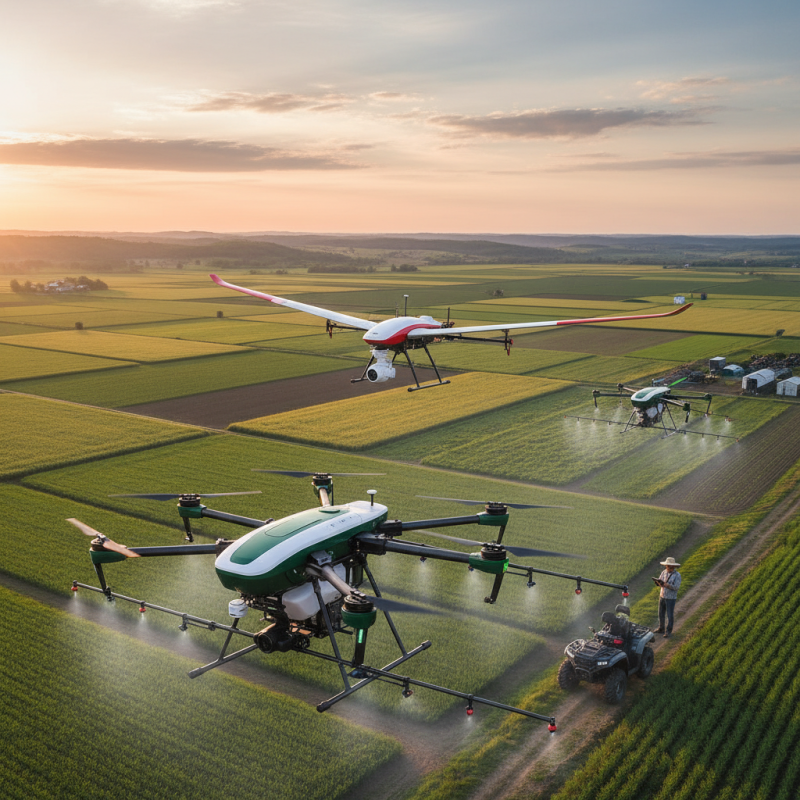
Overview of Agricultural Drones and Their Impact on Farming
Agricultural drones have transformed the way farmers approach crop management. These advanced tools offer a bird's-eye view of the fields. Farmers can monitor crop health and assess soil conditions with high accuracy. This technology reduces labor and increases efficiency. By collecting real-time data, drones help in making informed decisions.
The impact of drones on farming is significant. They enable precise application of pesticides and fertilizers. However, challenges remain, such as the high initial investment and the need for technical knowledge. Many farmers still face a steep learning curve. Integrating this technology into daily farming practices requires time and patience. While drones can diagnose issues early, they may not replace traditional methods entirely. There's ongoing debate on balancing technology with human expertise in agriculture.
Farmers must consider their specific needs when adopting drone technology. Factors like field size and crop type influence the effectiveness of drones. Investing in the right drone can yield great benefits, but it is not one-size-fits-all. Sustainability and cost-effectiveness are vital. As the industry evolves, continuous learning and adaptation will be necessary for successful implementation.
Key Features to Consider When Choosing an Agricultural Drone
When selecting an agricultural drone, several key features significantly impact farm efficiency. One crucial aspect is flight time. Most drones in the agricultural sector average about 20 to 30 minutes of continuous operation. According to a recent industry report, optimizing battery life can enhance productivity by up to 25%. Longer flight times allow farmers to cover more ground in a single session.
Payload capacity is another vital consideration. Drones can carry various sensors and cameras used for surveillance and crop health assessment. The average payload capacity ranges from 1 to 5 kilograms, depending on the model. Using drones equipped with high-resolution multispectral cameras can lead to more accurate crop analysis. About 70% of farmers who adopted these drones reported improved decision-making on pest control and crop management.
Lastly, user interface and ease of use impact the integration of drone technology in farming. A drone with a more intuitive interface can reduce the learning curve for new users. Farmers often struggle with technology, particularly those less familiar with software. Reports show that streamlined interfaces increase user satisfaction by 30%. Training programs must be developed to address this gap, ensuring that all farmers can maximize the benefits of drone technology.
Top 10 Agricultural Drones for Precision Farming Solutions
The integration of drones into precision farming has revolutionized agriculture. Recent reports suggest that the utilization of agricultural drones can increase yields by up to 30%. These devices allow farmers to monitor crop health, assess field conditions, and manage resources effectively. Drones provide real-time data that's crucial for making informed decisions. This data collection can reduce water usage by 20% and minimize pesticide application by substantial margins.
Tips: Regularly update your drone software for optimal performance. Consider seasonal adjustments in flight patterns to capture varying crop growth stages.
Additionally, drones equipped with advanced sensors can create detailed maps of the farmland. These maps reveal variations in soil health and moisture levels. This technology aids in precision irrigation strategies. Although the investment in drones can be significant, many farmers see returns within a few seasons. The challenge often lies in data interpretation and effective application of insights.
Tips: Collaborate with agronomists to analyze drone data. Investing time in training ensures you fully leverage drone capabilities.
Comparative Analysis of Drone Performance in Various Agricultural Tasks
The rise of agricultural drones has transformed farming practices. With advanced technologies, these drones improve efficiency in various tasks. Analyzing their performance helps farmers select the right one for specific needs. For instance, some drones excel in crop monitoring, while others are better for spraying pesticides or fertilizers.
The effectiveness of each drone varies by task. For crop health assessment, some offer multispectral cameras that capture light outside the visible spectrum. This data is crucial for identifying stressed plants. However, not all farmers understand how to analyze this data effectively. Training in data interpretation can maximize drone benefits.
Tips: Choose a drone based on the specific agricultural task you need. Consider factors such as battery life, payload capacity, and ease of use. Always review your drone's operational efficiency after a season. Reflect on areas for improvement, which can lead to better crop yields next time.
Future Trends in Agricultural Drone Technology and Applications
The rise of agricultural drones is reshaping farming practices. Emerging trends highlight the integration of advanced sensors and AI technology. These developments enable precision agriculture, leading to better crop management. Many farmers are now leveraging aerial imagery for timely decision-making. Enhanced mapping capabilities allow for more accurate assessments of soil health and crop stress.
Looking forward, future applications will likely include automated planting and targeted pesticide application. These innovations promise to reduce labor costs while increasing efficiency. However, some challenges will remain. Issues such as regulatory compliance and data privacy need addressing. As technology advances, farmers must be vigilant about ethical implications. Striking a balance between innovation and responsible farming is crucial.


 House of Worship
 Transportation
 Trade shows led display
 retail
 Creative Led Solutions
 Hospitality
 Higher Education
 Corporate LED


